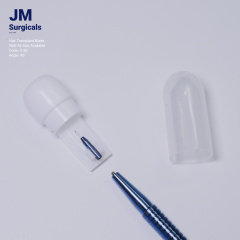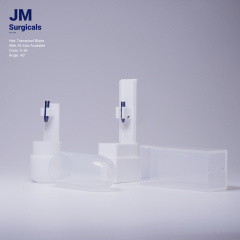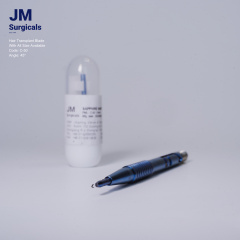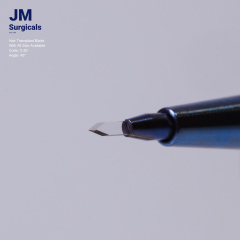
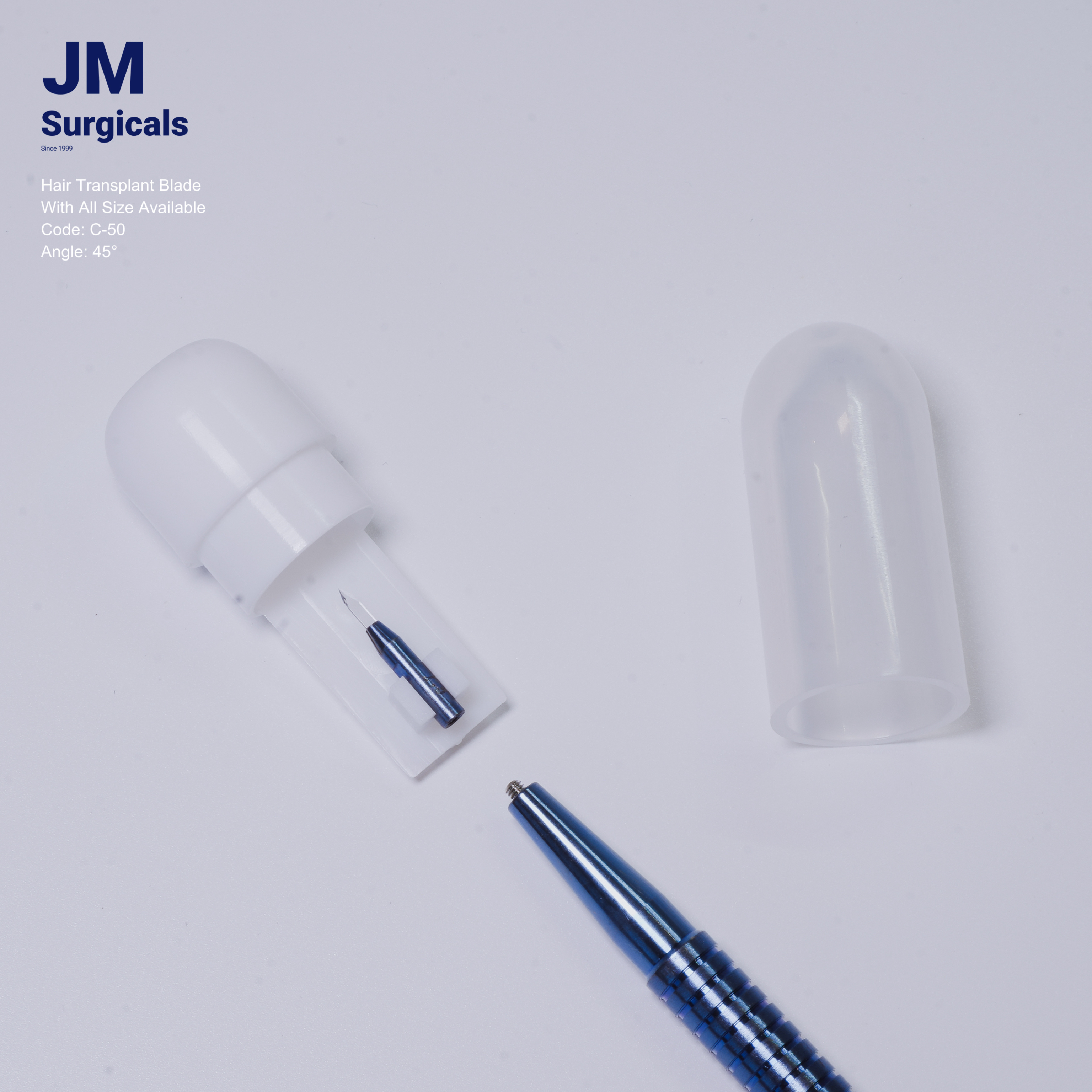
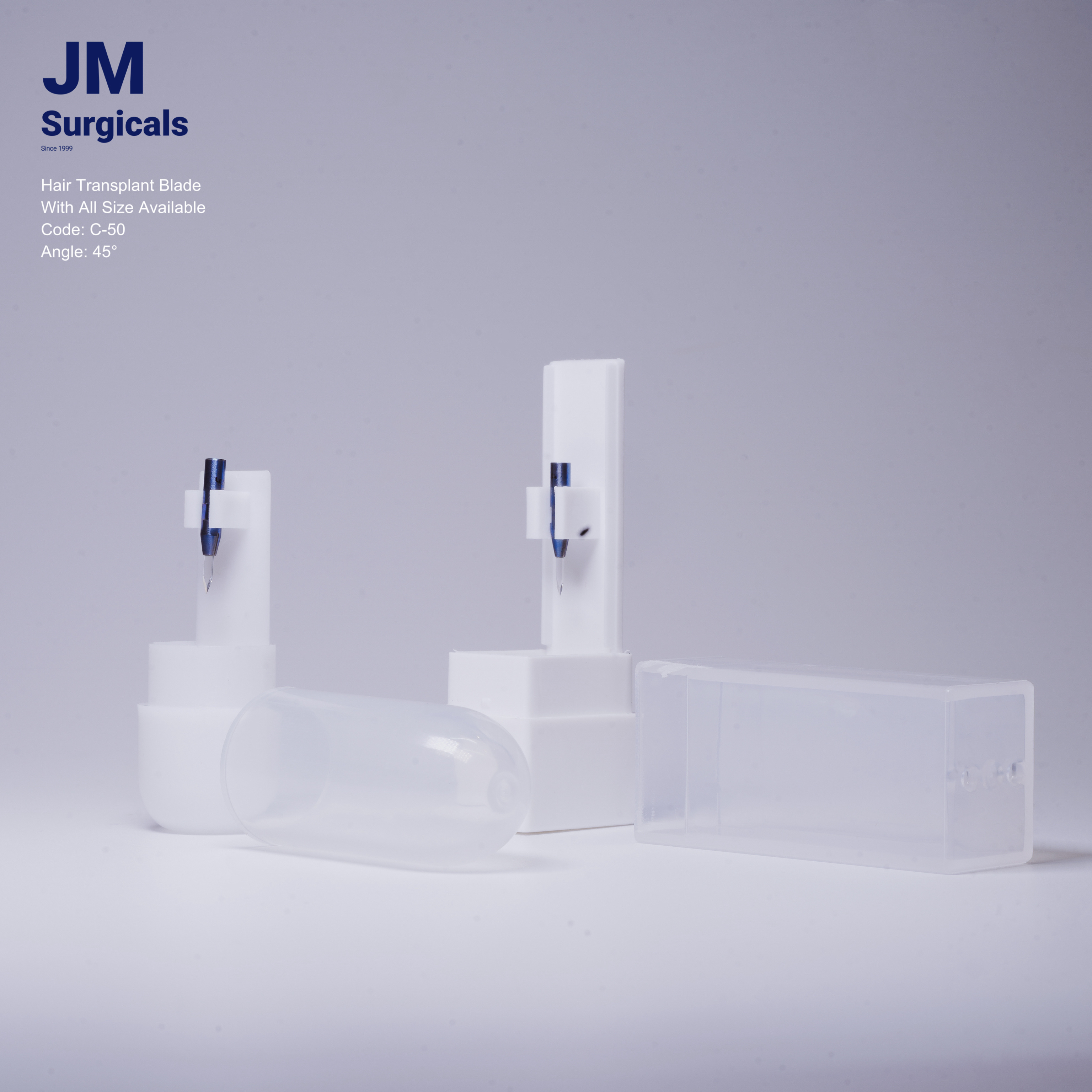
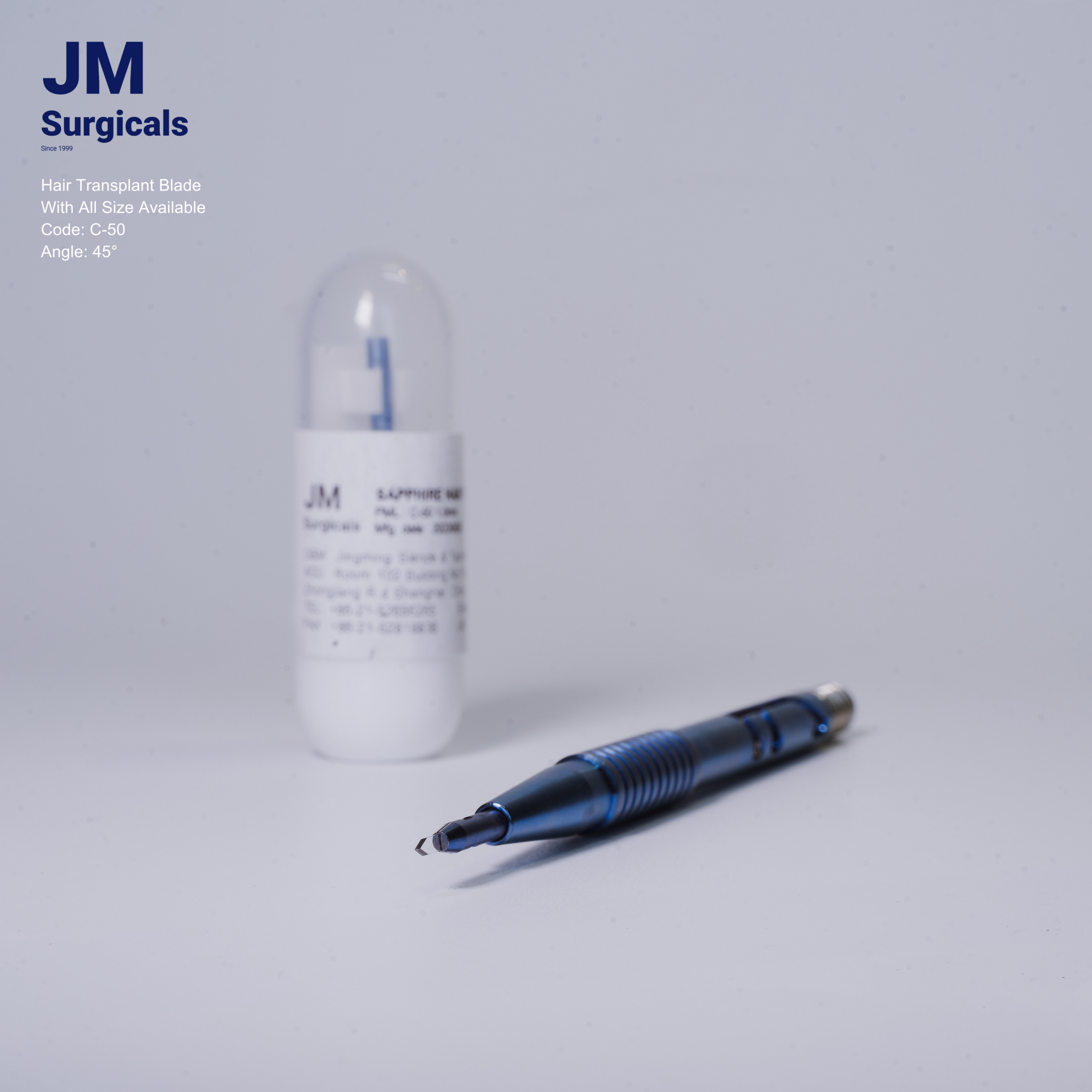
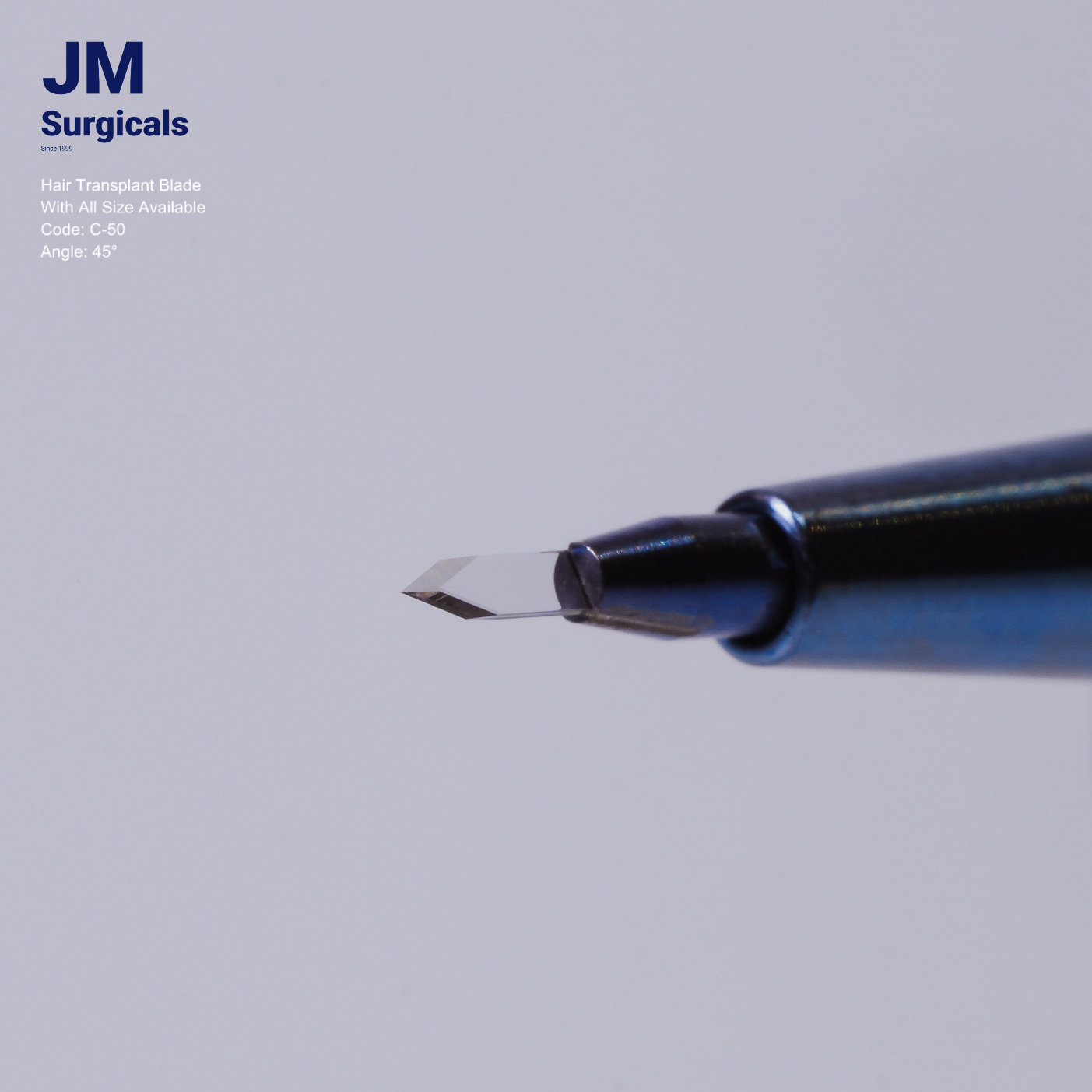
The 1.5mm sapphire hair transplant blade, crafted by our sapphire surgical blade factory, delivers ultra-precise follicular unit extraction. This custom size fue blade ensures accuracy and durability for optimized surgical outcomes.




Surgeons rarely judge a blade by its description. They judge it at the moment of incision: how the tip enters, how the graft releases, how far the edge wanders under pressure. The sapphire hair transplant blade in the C-50 range is built around that moment. It is a channel-opening instrument for follicular unit extraction, the tool that opens the recipient site a graft is placed into and, in many clinics, the same edge that incises around the follicle before it is freed.
Width is what separates this blade from the rest of its family. It is the widest standard option we make in the C-50 range, and the extra width opens a channel with room inside it, a shape that suits dense scalps, long sessions and grafts that need a little surrounding tissue rather than a squeeze fit.
The blade seats in specialized surgical handles; the blue and silver pen-style grips are the usual pairing, and each unit arrives under a clear protective cap with a dust cover over the tip so it reaches the tray protected. A clinic and a distributor receive the same article from our sapphire surgical blade factory: a hard sapphire cutting edge on a thin sapphire body, held in a heat-resistant case that goes directly into the sterilization workflow.
| Property | Specification |
|---|---|
| Product code | PTC501500001 |
| Product type | FUE hair transplant blade for recipient channel opening |
| Blade material | High-hardness sapphire |
| Width | 1.5 mm |
| Thickness | 0.25 mm |
| Length options | 4.5 mm, 5.0 mm, 5.5 mm |
| Angle options | 45 degrees, 60 degrees |
| Edge | Hand-polished cutting edge |
| Blade appearance | Clear sapphire body with a polished edge |
| Case | Heat-resistant plastic case, three styles, dust cover included |
| Sterilization | Case withstands high-temperature sterilization without deforming |
| Device classification | Class I |
| Quality certification | ISO 13485 |
| Handle options | Blue or silver pen-style handle |
FUE work is a sequence of small decisions: how deep the channel runs, how the edge meets the scalp, how the blade behaves when the surgeon changes direction between zones. The geometry keeps those decisions with the hand holding the handle. The cutting edge is straight and fine, the tip is angled rather than rounded, and the mount holds the blade rigid, so pressure applied at the handle arrives at the tip without deflection.
Angle sets the approach. A 45 degree tip meets the scalp at a shallower attitude; a 60 degree tip stands the edge up for a steeper entry. Neither is better in the abstract. Hair direction, scalp laxity and graft size change across a single head, and a surgeon may want both approaches in one session, which is why both angles are standard rather than special order.
Length is the second variable. A longer blade reaches further beyond the handle and opens a deeper channel in one pass, which is what thicker skin and coarser units usually ask for; a shorter blade gives finer control at the hairline. Because thickness stays constant across the range, the footprint of the channel is set by width and angle rather than by the bulk of the blade.
Where an established technique does not match a standard size, we grind a custom size FUE blade to the drawing.
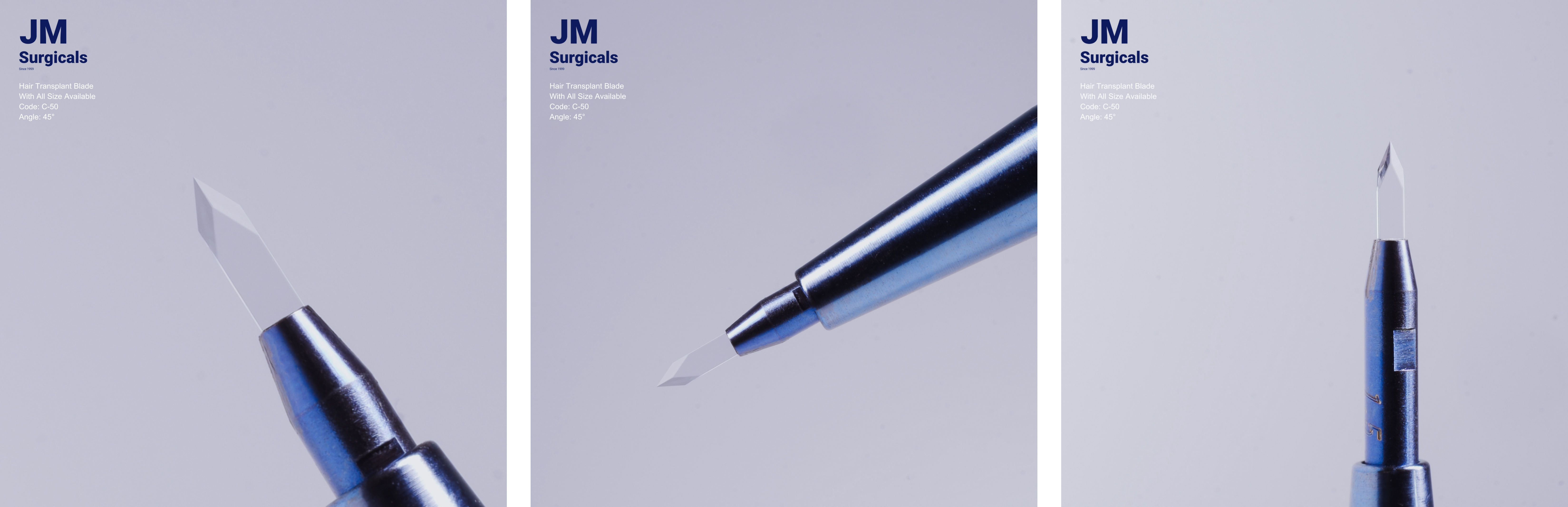
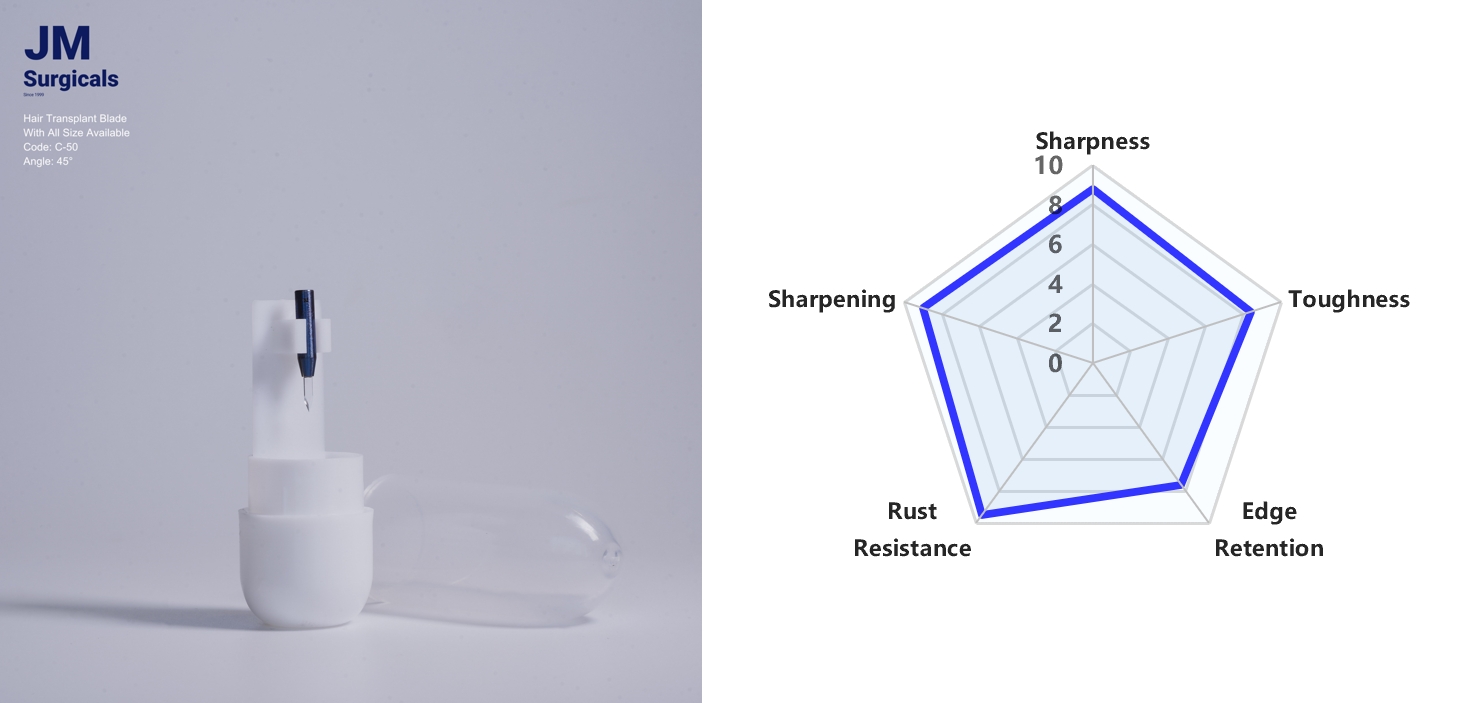
A very keen edge on a brittle body is a liability in a surgical tray. This blade is engineered the other way round: hardness from the sapphire, support from the way the edge is ground and mounted, so the tip stays keen under lateral load instead of failing at the first awkward angle.
The range is built on one platform. Three lengths across two angles all use the same mounting geometry, so a blade change mid-case does not change the way the instrument sits in the handle. A surgeon can move from a short blade for a fine hairline site to a longer one for a denser zone without readjusting grip or hand position.
Production runs through our own sapphire surgical blade factory in Shanghai, where grinding, polishing, edge inspection and case assembly happen under one roof. Keeping those steps together is what allows a change of angle or length to be handled as a production instruction rather than as a new project.
Taken together, the sizes work as a system rather than a catalogue: one family covering fine to broad channel work, sharing a case format and a mounting standard, so a clinic can standardise on a single line instead of sourcing each size from a different place.
In a follicular unit extraction case the channel comes first. Before a graft is placed, the recipient site has to be opened at the right depth and angle, with walls clean enough for the graft to sit without force. The sapphire hair transplant slit blade is the instrument for that step: it cuts the slit, withdraws, and leaves a channel sized to the graft rather than to the blade.
The same blade covers the extraction side of the procedure. Where a clinic uses one instrument for both jobs, the tip has to open a recipient site and incise around a follicle without either task suffering, which is why the profile is used in clinics that run a compact set rather than a separate tool for every step.
Sterile field discipline is part of the clinical role. The blade arrives in a case built for high-temperature sterilization, so it can move from packaging to autoclave to tray without being repacked. In a working theatre that continuity matters as much as sharpness: a fue hair transplant blade that has to be rewrapped before use adds a step and a risk.
Adaptability across patients is the last piece. Multiple angles and lengths let one blade line serve different hair types, densities and scalp zones instead of forcing a clinic to hold several unrelated instruments. Outside hair restoration, the same edge is used in regenerative medicine research for cell and tissue work, where a clean cut and a fine tip matter for the same reasons.
Training centres need instruments that behave the same way every time. A trainee learning recipient-site placement has enough variables to manage without the blade changing character between attempts, and the sapphire hair transplant slit blade gives a consistent entry and a predictable release, so the lesson stays on technique.
The range doubles as a teaching tool. Working across the length and angle options shows trainees how depth and approach change the channel, on the same instrument platform they will meet in a live theatre. Standardised conditions are what make that comparison useful rather than confusing.
Durability matters more here than in most settings. Simulation sessions put a blade through more handling than a live case, and the sapphire edge tolerates that without losing its polish. Hygiene compliance follows the same route: the blade and its case go through the training facility's sterilization process like the rest of the set.
For educators, consistency also makes assessment fairer. Two trainees working to the same specification can be compared on skill rather than on how their instrument happened to cut that morning.
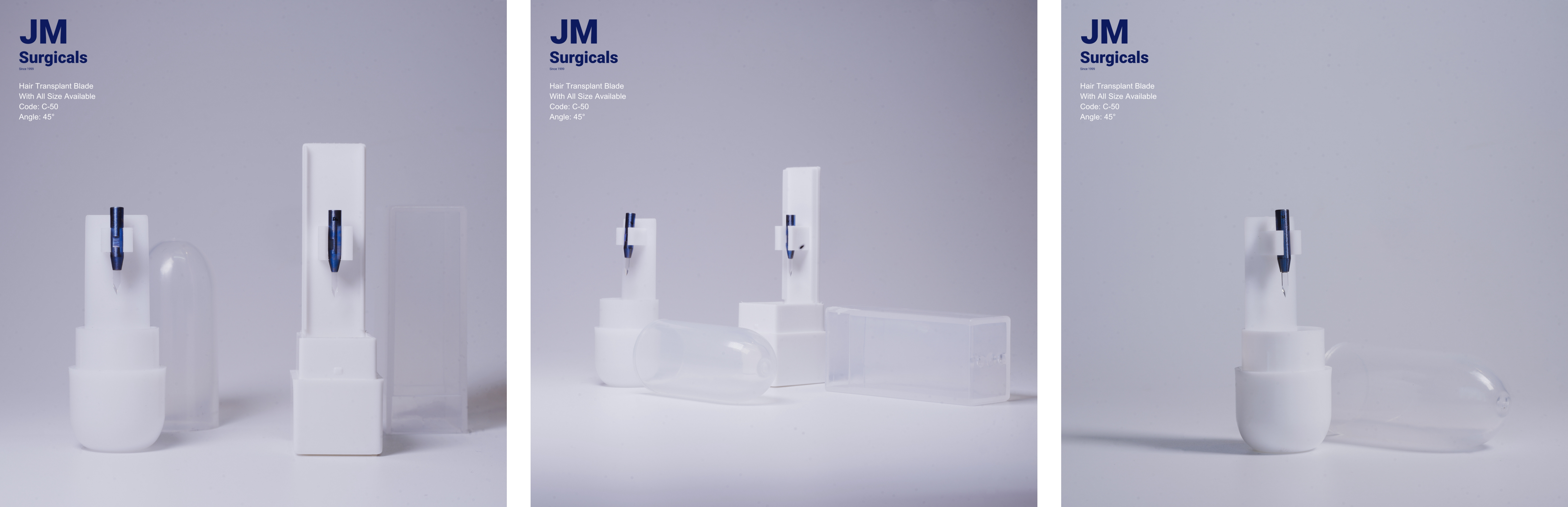
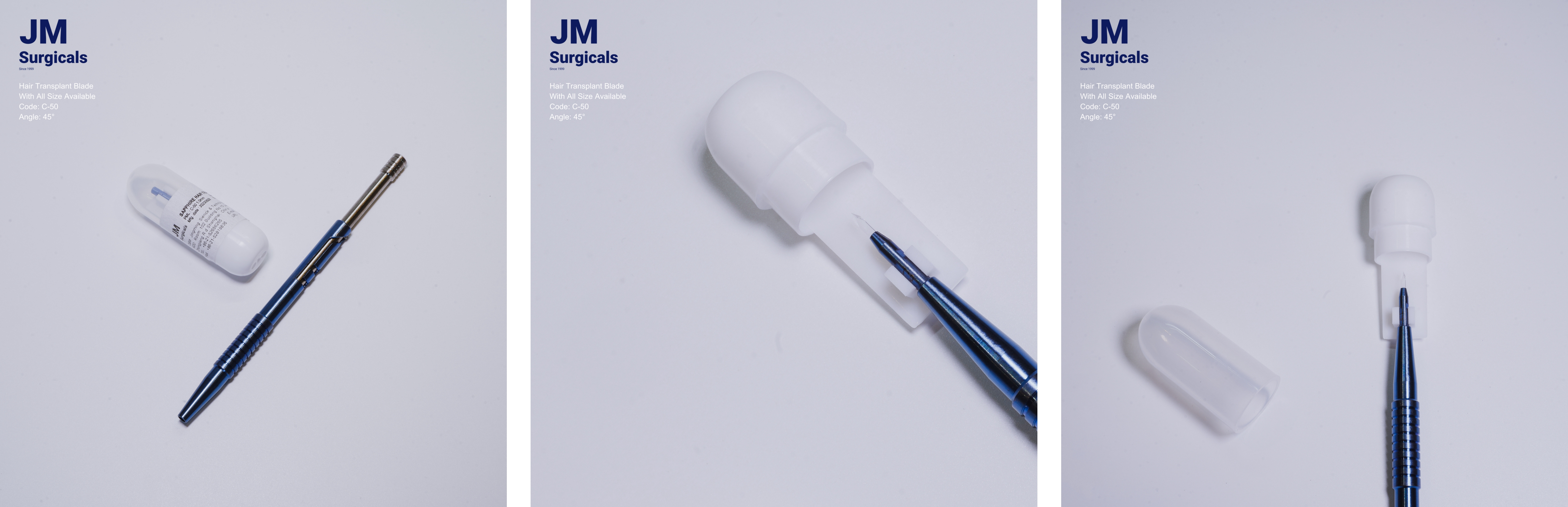
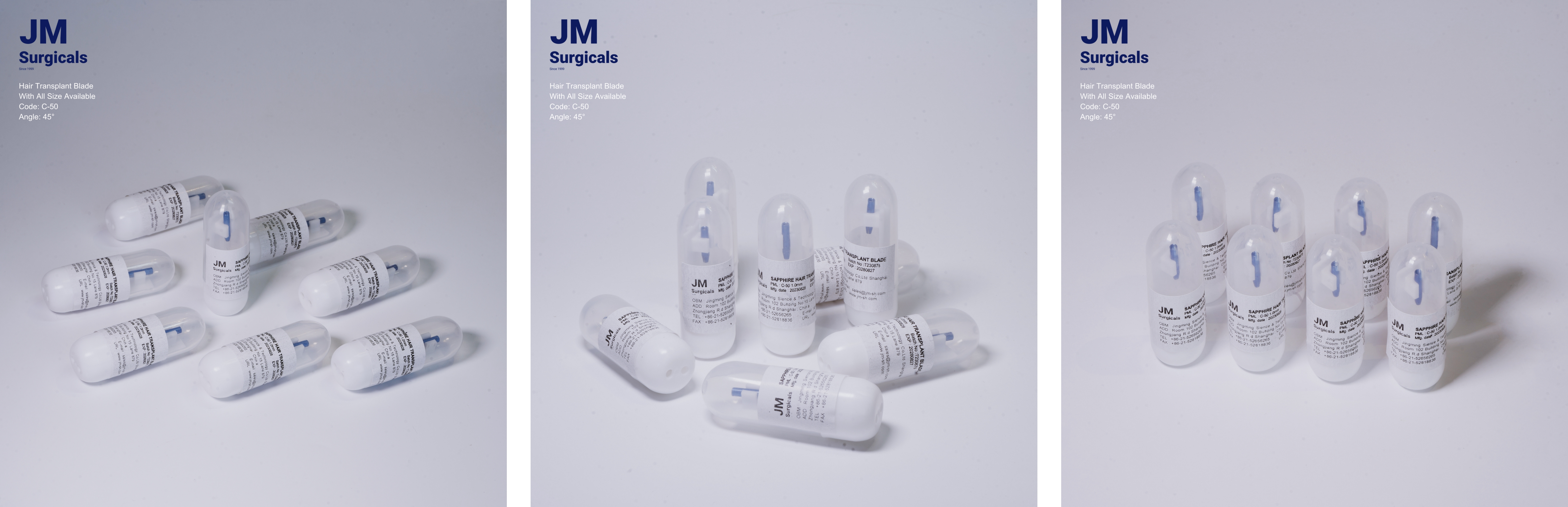
The custom-size FUE blade gives surgeons enhanced tactile feedback and ergonomic handling for meticulous control through the incision and extraction phases. Its durable sapphire surface retains sharpness across multiple uses, which can reduce procedural time and the frequency of instrument replacement. The design helps minimize tissue trauma and supports better patient recovery metrics and surgical accuracy in follicular unit extraction. The Sapphire Hair Transplant Blade C-50 also fits clinical workflows by aligning with hygiene protocols and simplifying blade replacement for consistent performance in demanding surgical environments. It is widely used in follicular unit extraction.
Because we manufacture in-house, technical questions go straight to the engineers who build the instruments. JM Surgicals has been a surgical instrument manufacturer since 1999, with a team of more than 100 people, and we work alongside clinics, hospitals, private surgeons and distributors to match the right specification to each surgeon's technique and existing instruments — and to say honestly when a custom size, neutral packing or own-brand packing suits the order better. Support carries on after delivery: our team answers handling, sterilisation and reprocessing questions, helps troubleshoot anything that behaves unexpectedly, and turns custom requests around quickly. Tell us what you need to achieve and we will confirm what we can build for you.
High-hardness sapphire, ground and then hand-polished into the cutting edge. We use sapphire for this sapphire hair transplant blade because it holds a fine edge and resists corrosion, so cutting behaviour does not drift between the first incision of a case and the last. A dust cover protects the edge inside the case until it is seated in the handle.
Yes. The three standard lengths and two angles cover most techniques, but a custom size fue blade can be produced to your drawing. Send the width, length and angle you need and tell us which handle it must seat in. As a sapphire surgical blade factory we run these as normal production orders, so the same specification can be repeated on every restock.
Each sapphire hair transplant slit blade is sealed in its own heat-resistant plastic case with a dust cover over the tip. The case holds its shape through high-temperature sterilization, so the blade can go from case to autoclave to tray without being repacked. Three case styles are available to match how your department stores and issues blades.
It depends on the technique and the zone being treated. The 45 degree tip meets the scalp at a shallower attitude, while the 60 degree tip stands the edge up for a steeper entry. Many clinics keep both on the tray and switch as the case moves across the scalp. If your surgeons are still settling on a house style, confirm the preferred angle with them before fixing a standing order.
Match it to the depth of channel your technique needs. The longer options reach further beyond the handle and suit thicker skin and coarser units; the shorter option gives finer control at the hairline. Clinics treating a wide patient mix usually keep two lengths rather than one, and the mount is identical across all of them.
It mounts in specialized surgical handles, and we supply blue or silver pen-style handles as a matching option. Fittings vary between manufacturers, so tell us which handle you work with and we will confirm the fit before you order. If you already run a C-50 blade from us, the mounting is unchanged.
This width opens the broadest channel of the range, with more room around the graft, which suits dense scalps and grafts harvested with a little surrounding tissue. The narrower widths are aimed at fine single-hair sites and tighter recipient patterns. Because every width uses the same mount, a surgeon can move between them within one case without changing handles.
Hair restoration is the main use: opening recipient channels and freeing grafts in FUE cases. The same sapphire edge also appears in regenerative medicine research for cell and tissue work, and in training settings where a consistent, fine cut is needed. If your application is non-standard, describe it and we will tell you whether this geometry suits it.