
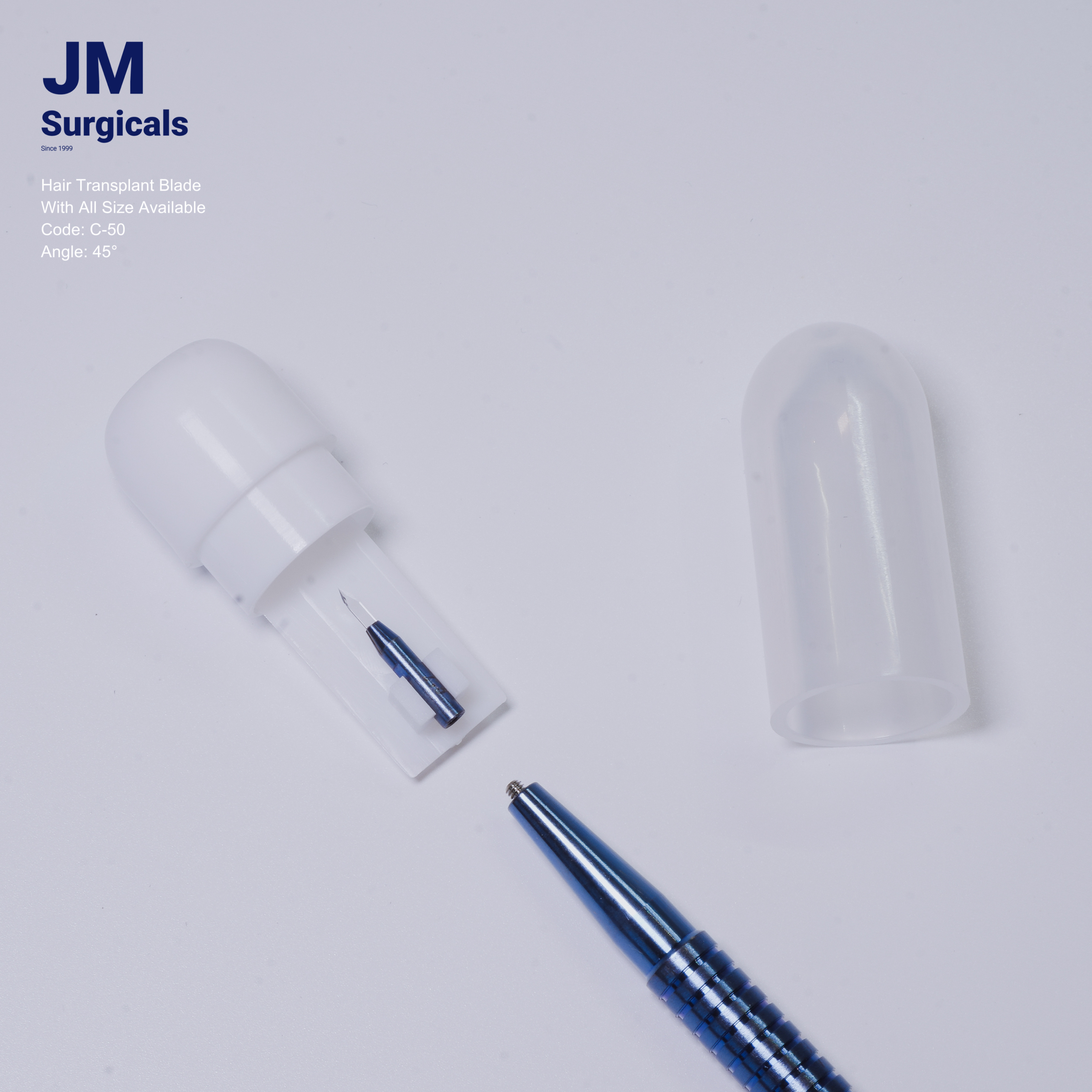
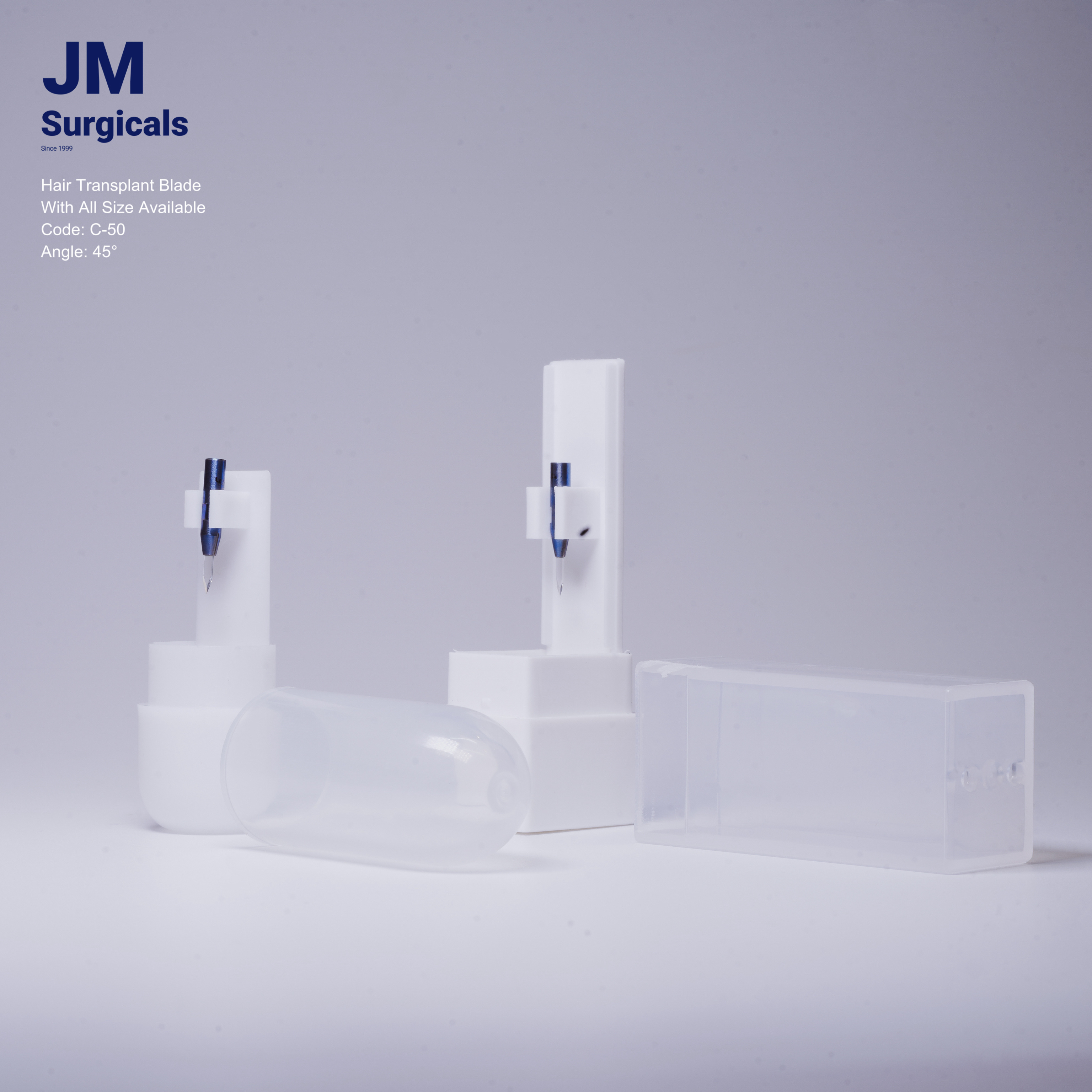
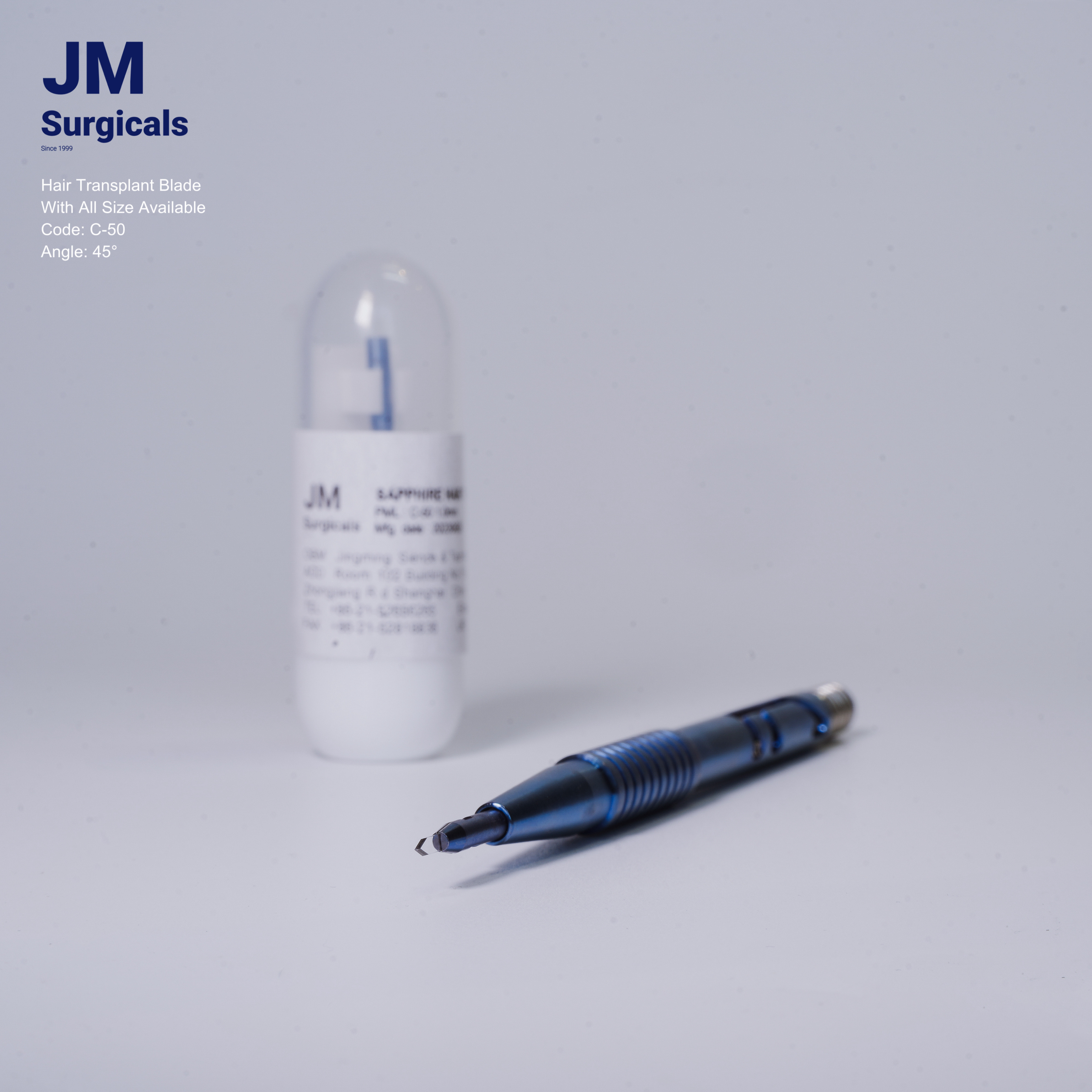
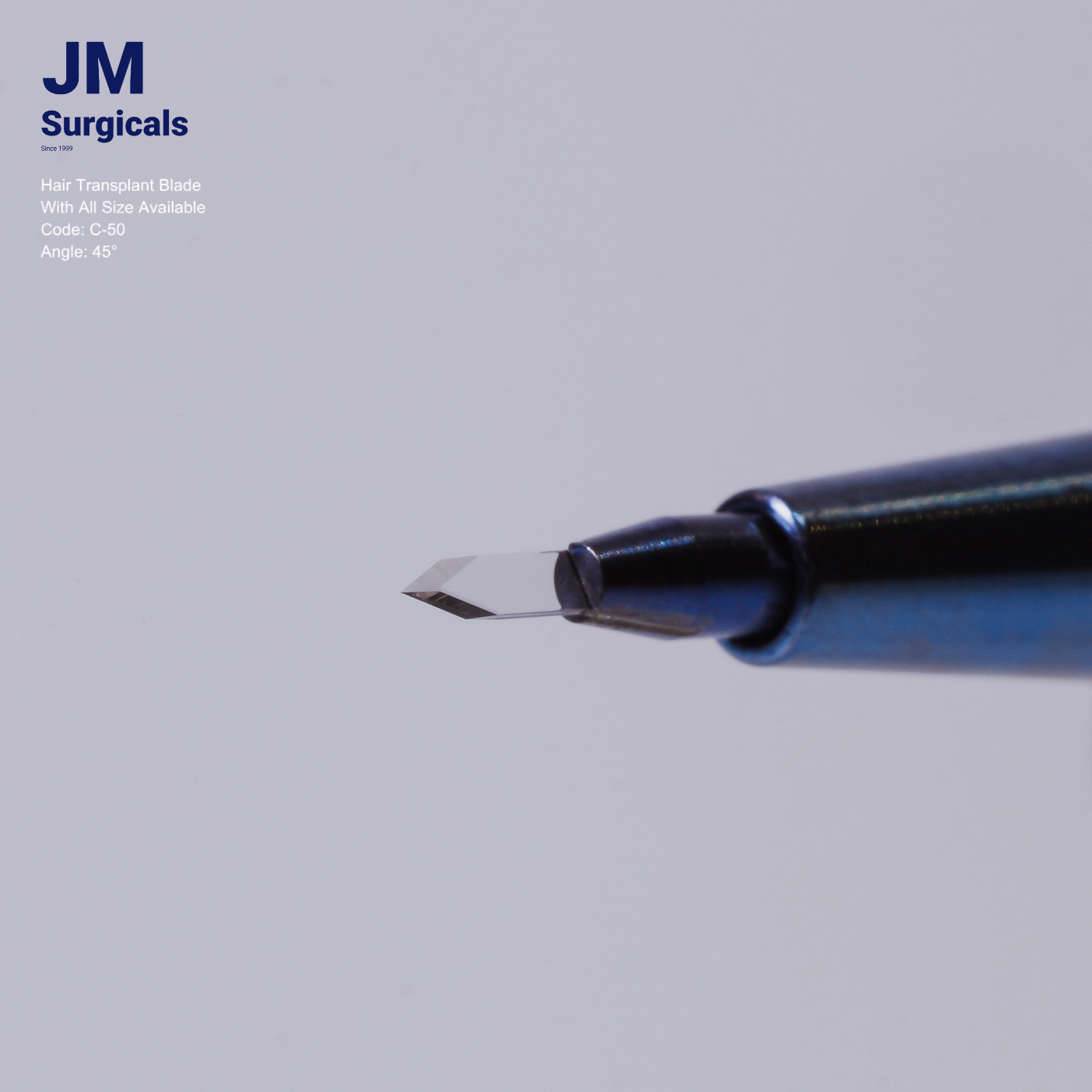
The 1.4mm sapphire hair transplant slit blade offers precise follicular unit extraction with enhanced durability and sharpness. Manufactured by a leading sapphire surgical blade factory, it supports customized procedures with superior accuracy.


Optimized for Precision in Follicular Unit Extraction
Designed specifically for specialized clinics and medical professionals performing follicular unit extraction (FUE), the 1.4mm sapphire hair transplant slit blade enables meticulous graft harvesting while minimizing tissue trauma. This custom size fue blade is suitable for practitioners requiring consistent performance in high-volume hair transplant environments. The surgical tool’s ergonomic construction supports extended use, meeting rigorous clinical demands for accuracy and comfort throughout complex procedures.
Advanced Material Properties and Dimensional Accuracy
Manufactured in a certified sapphire surgical blade factory, this blade features a 1.4mm width and 0.25mm thickness, crafted from high-hardness sapphire material. The blade’s ultra-sharp edge ensures minimal follicle damage, while corrosion and wear resistance maintain cutting efficiency over time. Available in multiple blade lengths and angle configurations, it accommodates diverse operational protocols. The model hair transplant sapphire knife c-50 is packaged in high-temperature resistant, sterilization-safe cases, aligning with ISO 13485 standards to guarantee safety and reliability.
Integration in Hair Transplant and Regenerative Medicine
The sapphire hair transplant channel opener serves critical roles in hair transplant clinics by facilitating precise channel formation, enabling optimal graft placement, and improving patient outcomes. Beyond transplant applications, it supports regenerative medicine research requiring ultra-fine surgical blades for cell and tissue extraction. Clinics benefit from the system’s adaptability to various surgical workflows, enhancing procedural accuracy and reducing recovery time, thereby elevating overall treatment efficacy in hair restoration contexts.


Design Synergy with Surgical Precision and Customization
The design of this custom sapphire surgical blade incorporates a balance of blade sharpness and robustness to eliminate tissue drag and enhance control. The modular blade and handle system allows selection from different length and angle combinations, adapting to patient-specific needs. As a product originating from a specialized sapphire surgical blade factory, it offers consistency in manufacturing tolerances. This adaptable configuration facilitates seamless integration with existing FUE surgical systems, optimizing workflow efficiency and practitioner satisfaction.
Operational Reliability and Enhanced Surgical Outcome
Performance benefits include precise follicular extraction with reduced tissue injury, supporting faster postoperative healing and improved graft survival. The hair transplant sapphire knife c-50’s ergonomic handle reduces operator fatigue during prolonged procedures, increasing throughput without compromising accuracy. Its high durability and stable cutting edge decrease blade replacement frequency, contributing to cost effectiveness. Overall, the blade system delivers reliable, repeatable performance that enhances clinical productivity and patient care quality.

Application in Advanced Follicular Unit Extraction Clinics
In professional hair transplant clinics focused on refinement and efficacy, the sapphire hair transplant slit blade serves as a primary instrument for follicular unit extraction. Its precision-engineered edge enables surgeons to minimize trauma to surrounding tissue, improving graft viability and accelerating recovery. Compliance with medical device standards ensures safe use in surgical environments, while multi-angle and size availability permits customization to specific patient anatomy. Integration with existing FUE protocols supports streamlined operation and consistent procedural outcomes.
Role in Regenerative Medicine and Surgical Training
Within regenerative medicine facilities, the custom size fue blade provides necessary precision for cell isolation and tissue sampling critical to experimental and therapeutic applications. Its ultra-thin cutting profile allows refined manipulation under microscopic conditions, expanding research capabilities. Additionally, the blade’s reliability and standardized specifications make it ideal for surgical training programs focusing on microsurgery techniques. This integration enhances practitioner skill development and compliance with procedural reliable practices, ultimately contributing to innovation and improved patient therapies.


What materials are used to manufacture the 1.4mm Sapphire Hair Transplant Blade?
We use high-hardness sapphire to craft our sapphire surgical blade, ensuring exceptional sharpness, durability, and corrosion resistance. This material allows precise follicular extraction, supporting faster healing and reducing tissue damage during procedures.
Can I order custom sizes or designs for the FUE blades?
Yes, we offer customization of blade dimensions and packaging. Our factory specializes as a sapphire surgical blade factory, allowing tailored options such as logos and custom sizes. Logo customization requires a minimum order of 300 pieces, while packaging customization starts at 5000 pieces.
How do you ensure the blades meet international medical standards?
All our blades, including the 1.4mm model, are certified to ISO 13485 standards. We use high-grade sapphire materials and maintain stringent manufacturing processes to guarantee safety, precision, and compliance with medical device regulations.
What is the typical delivery time for bulk orders of the sapphire hair transplant blades?
For orders up to 500 pieces, the lead time is approximately 10 days. Larger orders have negotiable lead times to accommodate production capacity and logistics. We recommend contacting us early for planning your supply needs.

The 1.4 mm sapphire hair transplant blade is the size many clinics settle on once the case list mixes small touch-up sessions with full-scalp restorations. It is wide enough to open a full-scalp session and fine enough to work along a hairline, so the surgeon keeps angle and depth under control with one instrument rather than switching mid-list.
We build it for the people who work with it all day: hair restoration surgeons, FUE technicians and operating room nurses running long case lists. What they notice first is not a new routine to learn but how little the edge changes across a full list, where the twentieth case should feel like the first. That steadiness is what makes the blade practical in high-volume workflows, where a mid-list change costs time the schedule does not have.
The same geometry has a second life outside the operating theatre. Research groups use it for fine cell and tissue work where a very thin cut matters, and training programmes use it because the blade is repeatable enough to teach microsurgical technique on.
We manufacture in-house as a sapphire surgical blade factory and supply clinics, distributors and private-label customers directly, so an order from a single surgeon and one from a multi-site group run on the same line. Tell us how you work and we will point you to the configuration that fits.
| Model | C-50 |
|---|---|
| Product code | PTC501400001 |
| Blade width | 1.4 mm |
| Blade thickness | 0.25 mm |
| Working lengths | 4.5 mm, 5.0 mm, 5.5 mm |
| Cutting angles | 45° and 60° |
| Blade material | High-hardness sapphire |
| Handle options | Blue or silver |
| Blade case | High-temperature resistant plastic, dust cover included, three styles |
| Logistics packing | Sturdy cardboard cartons |
| Device classification | Class I |
Each blade is cut from high-hardness sapphire and polished down to its final edge. Sapphire grows as a single crystal, so there is no grain for the edge to chip along and the cutting surface behaves the same way over its whole length instead of dulling unevenly near the tip.
That matters more in FUE than in most procedures. The blade sits inside the scalp at a fixed angle for hundreds of incisions in a session, and any change in resistance is felt immediately by the surgeon and shows up in graft quality. A sapphire fue blade keeps that resistance low and constant, which is why clinics moving a lot of grafts tend to standardise on sapphire rather than on steel.
The material also survives the room it lives in. Sapphire does not rust, pit or stain, it takes repeated autoclave cycles, and the moisture of a sterile processing department does not affect it — so the instrument that comes back from the steriliser is the same one that went in.
Every edge is checked by hand before packing. We are a sapphire surgical blade factory rather than a trading house, so polishing, inspection and packing all happen under one roof, and a question about the edge reaches the people who made it.
Because we manufacture in-house, technical questions go straight to the engineers who build the instruments. JM Surgicals has been a surgical instrument manufacturer since 1999, with a team of more than 100 people, and we work alongside clinics, hospitals, private surgeons and distributors to match the right specification to each surgeon's technique and existing instruments — and to say honestly when a custom size fue blade, neutral packing or own-brand packing is the better fit for the order. Support carries on after delivery: our team answers handling, sterilisation and reprocessing questions, helps troubleshoot anything that behaves unexpectedly, and turns custom requests around quickly. Tell us what you need to achieve and we will confirm what we can build for you.
The cutting element is high-hardness sapphire, grown as a single crystal and hand-polished to its final edge. The case around it is a high-temperature resistant plastic that holds its shape through autoclave cycles. Sapphire is what gives the blade its sharpness, its resistance to corrosion and its ability to keep a stable edge through repeated sterilisation — the three properties that matter most when an instrument is used for follicle extraction rather than general cutting.
Yes. Width, working length, cutting angle and case style can all be built to your specification, and we can print your logo or supply the blades in neutral packaging. Send the dimensions you work with, or a drawing of the blade you currently use, and we will confirm feasibility before anything is scheduled. Changing a length or an angle is straightforward; a completely new geometry takes longer because it has to be proven on the polishing line before it goes into production.
Production runs under an ISO 13485 quality management system, and every instrument is classified as a Class I medical device against the applicable national safety standard. Those controls apply to the whole C-50 range rather than to a single catalogue item, so nothing about the classification changes with the width, the length or the angle you order. Each batch is made and packed under that system, and both references are the ones your regulatory team will want on file.
It sits in the middle. Narrower widths are chosen when a surgeon wants the finest possible recipient site, usually for dense packing along a hairline; the wider sizes suit channel-opening work where a broader incision is intended. A fue slit blade at 1.4 mm is the practical compromise for a case mix that includes both.
The sapphire fue blade is built to fit standard FUE blade handles and blade assemblies. Tell us which handle system your team works with and we will confirm the fit before you order. If you are changing handle and blade at the same time, check the two together rather than assuming the seat is identical to your previous combination.
The blades are supplied in high-temperature resistant cases designed to go through your own sterilisation cycle, so your team controls the sterile chain from the moment a case is opened. Follow your facility's validated autoclave protocol and inspect the edge under magnification before the first incision. If your protocol requires a particular presentation — case style or labelling — raise it with our team and we will confirm what is possible.


