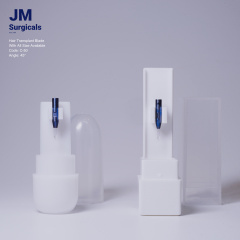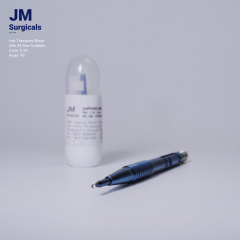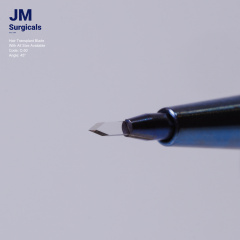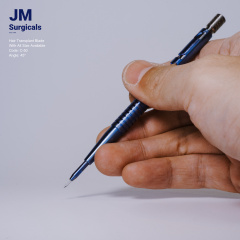
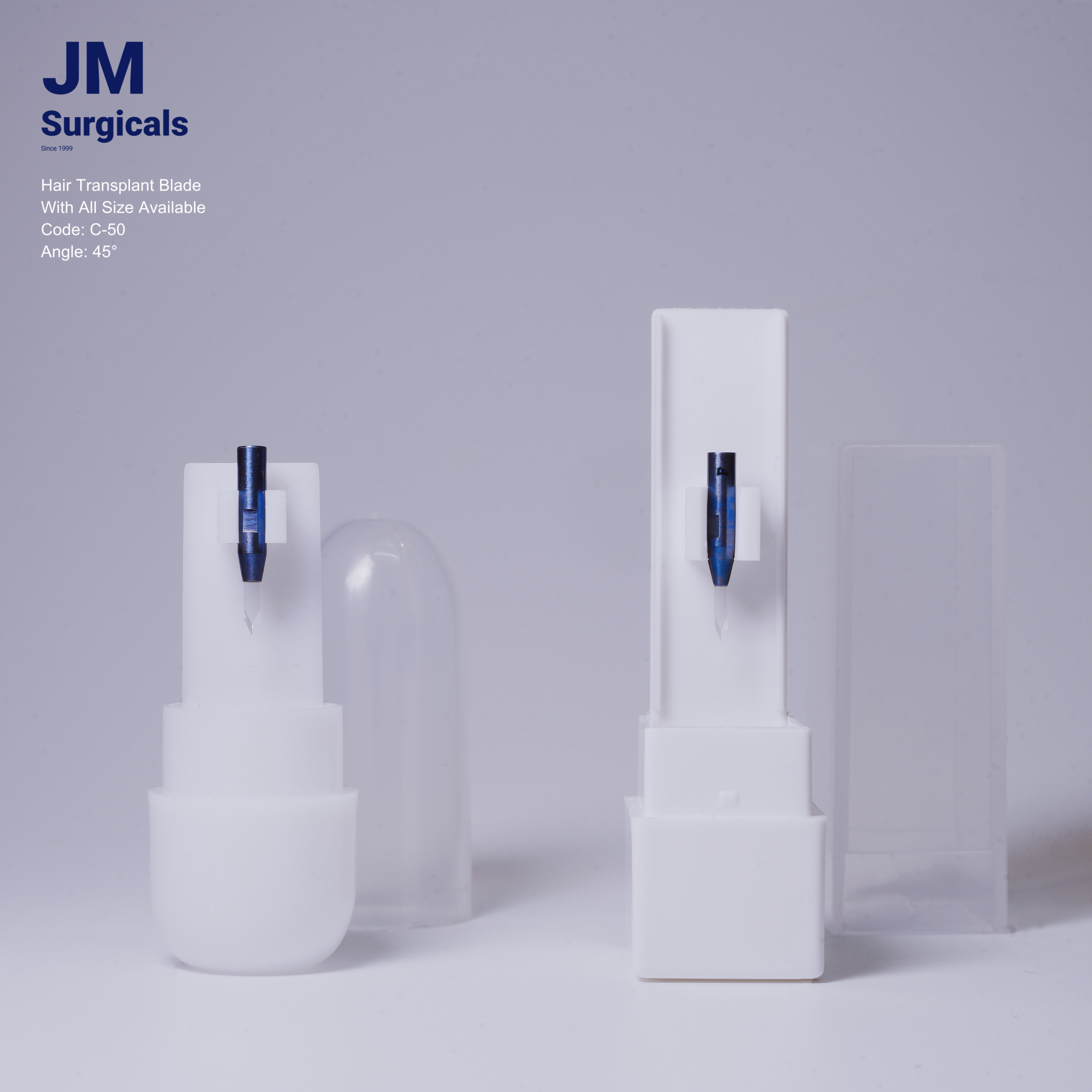
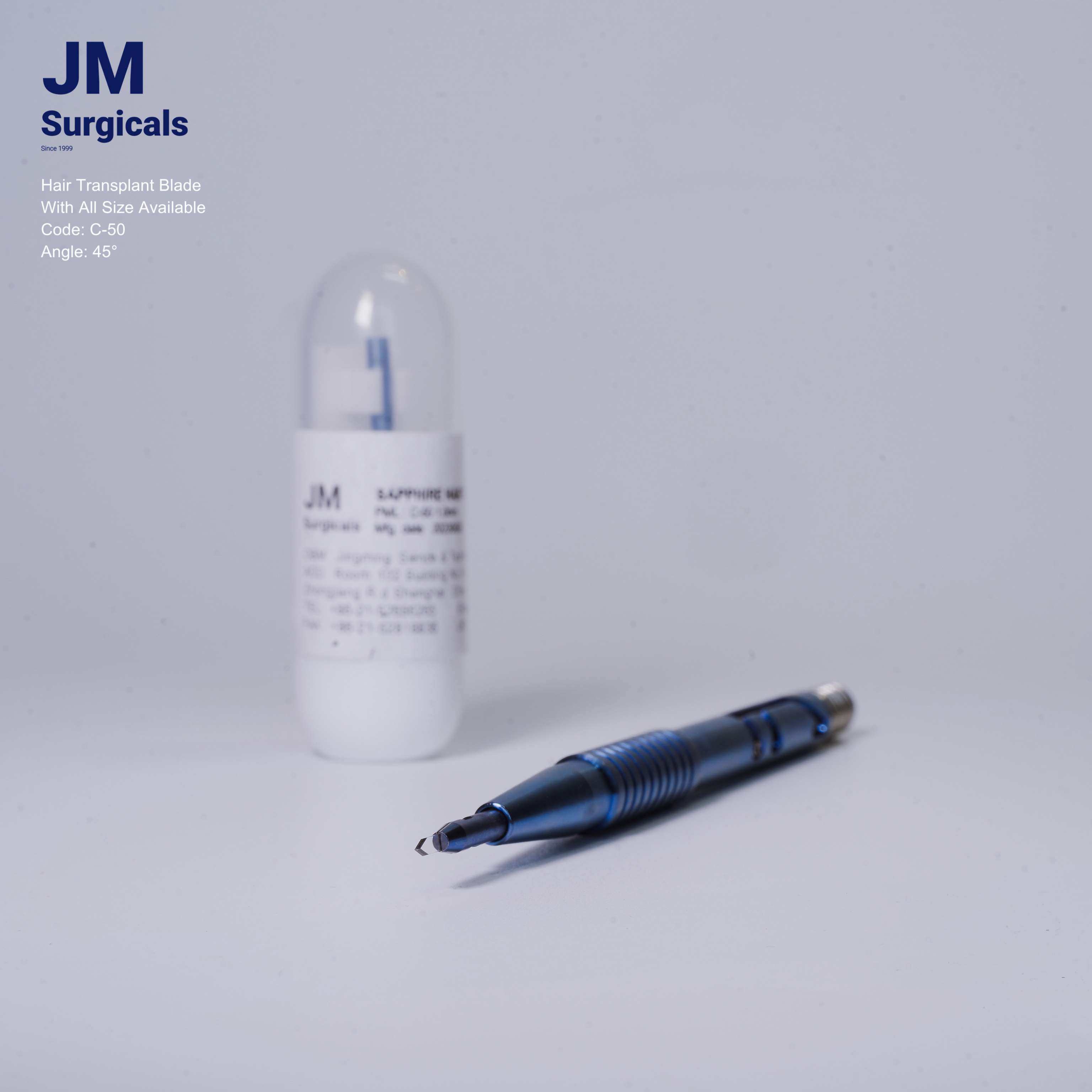
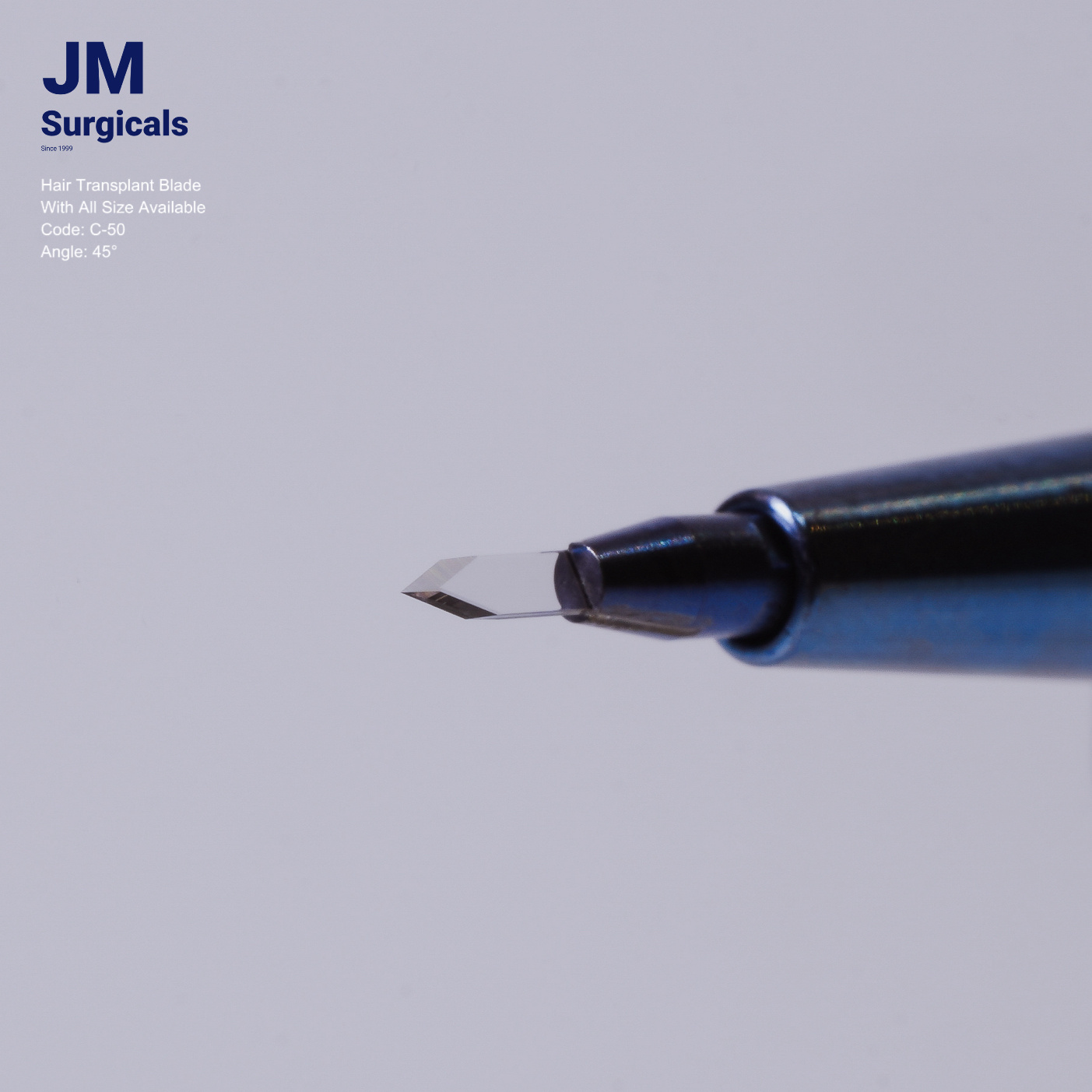
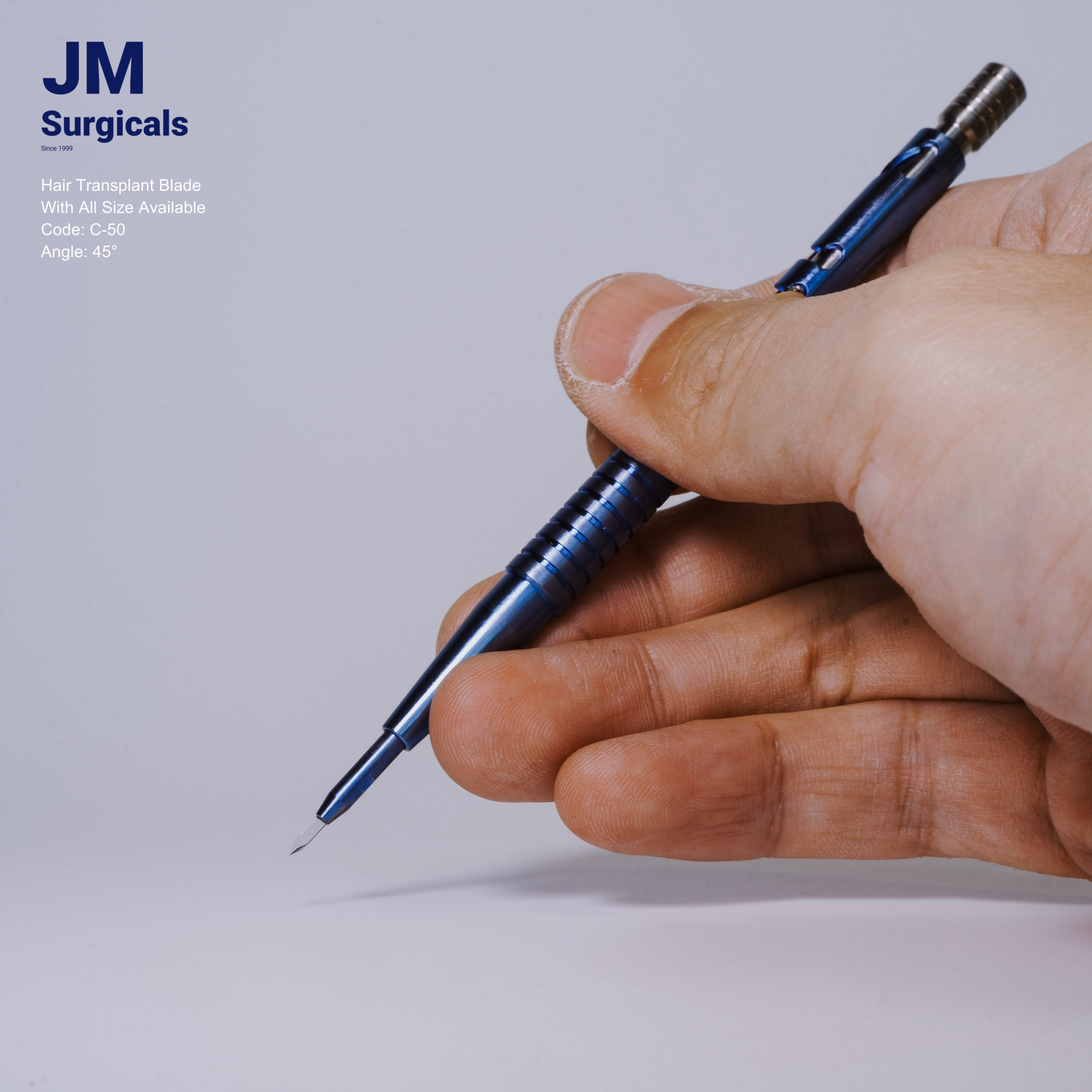
The 1.3mm sapphire hair transplant blade from our sapphire surgical blade factory is engineered for precision follicular unit extraction. This custom size fue blade offers exceptional durability and low trauma hair transplant blade performance in clinical hair restoration.


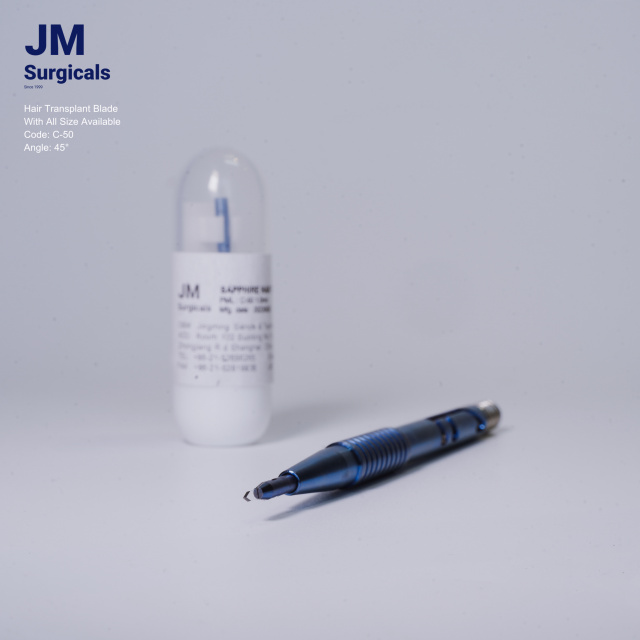



The 1.3 mm blade is the widest of the C-50 sizes we list individually, and it exists for the cases where a 1.2 mm channel leaves the surgeon working too tight. Each blade is cut from high-hardness sapphire and polished along the cutting edge at our sapphire surgical blade factory; the thickness, lengths and angle options are listed in the specifications. Sapphire holds its edge through long lists and repeated autoclave cycles in a way steel does not, which is why clinics running dense packing and revision work keep a wider blade on the tray as a standard item rather than an emergency. The extra room in a 1.3 mm channel lets a graft seat on the first pass and gives the surgeon a more definite feel through tissue that has been operated on before. It is a professional FUE instrument, built to be sterilised between cases and used alongside the narrower blades in your set.
| Blade width | 1.3 mm |
| Blade thickness | 0.25 mm |
| Blade lengths | 4.5 mm, 5.0 mm, 5.5 mm |
| Cutting angles | 45° and 60° |
| Blade material | High-hardness sapphire |
| Blade body | Transparent, smooth polished surface |
| Edge | Hand-polished cutting edge |
| Handle options | Blue or silver |
| Sterilisation | Autoclave compatible; the case holds its shape at sterilisation temperature |
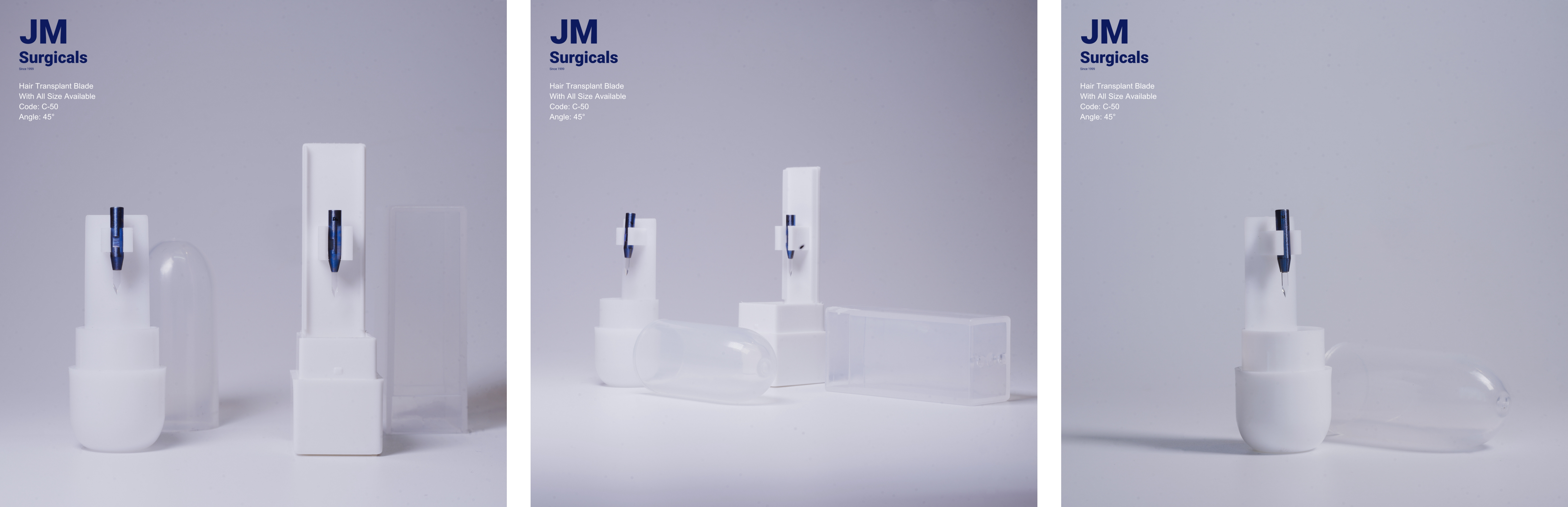
| Primary packaging | Heat-resistant plastic case with dust cover, three case styles |
| Outer packaging | Sturdy cardboard cartons |
| Quality system | Manufactured under ISO 13485 |
| Device classification | Class I |
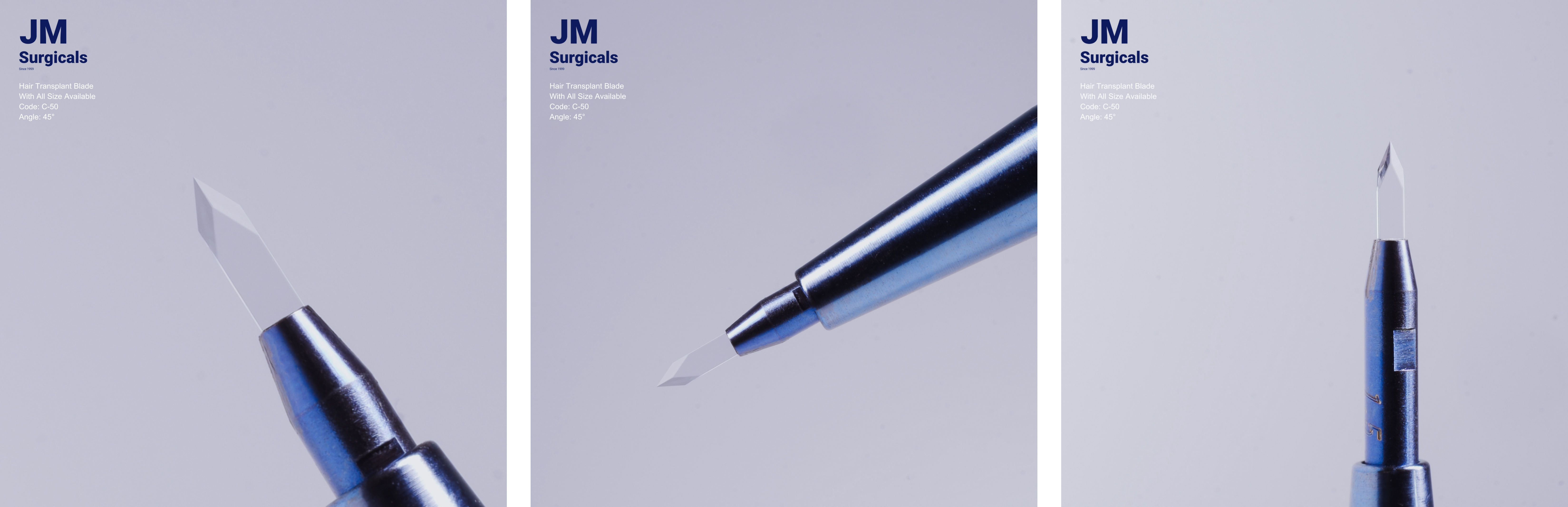
Width does more than change the size of the opening. Stepping up to 1.3 mm widens the channel, gives forceps room to seat a graft without re-opening the site, and stiffens the feel of the pass — which is why surgeons reach for it during denser packing, with larger follicular units, in revision areas where earlier work has left the tissue less forgiving, and in the later hours of a long session when a decisive cut beats a delicate one. The trade-off is a slightly larger wound at each recipient site and less of the near-invisible finish that a 0.9 mm or 1.0 mm blade gives in fine hair, so many clinics run a mixed tray: narrow blades for the hairline, 1.3 mm through the mid-scalp and crown. Where 1.3 mm is close but not exact, a custom size fue blade can be made to the width you want.
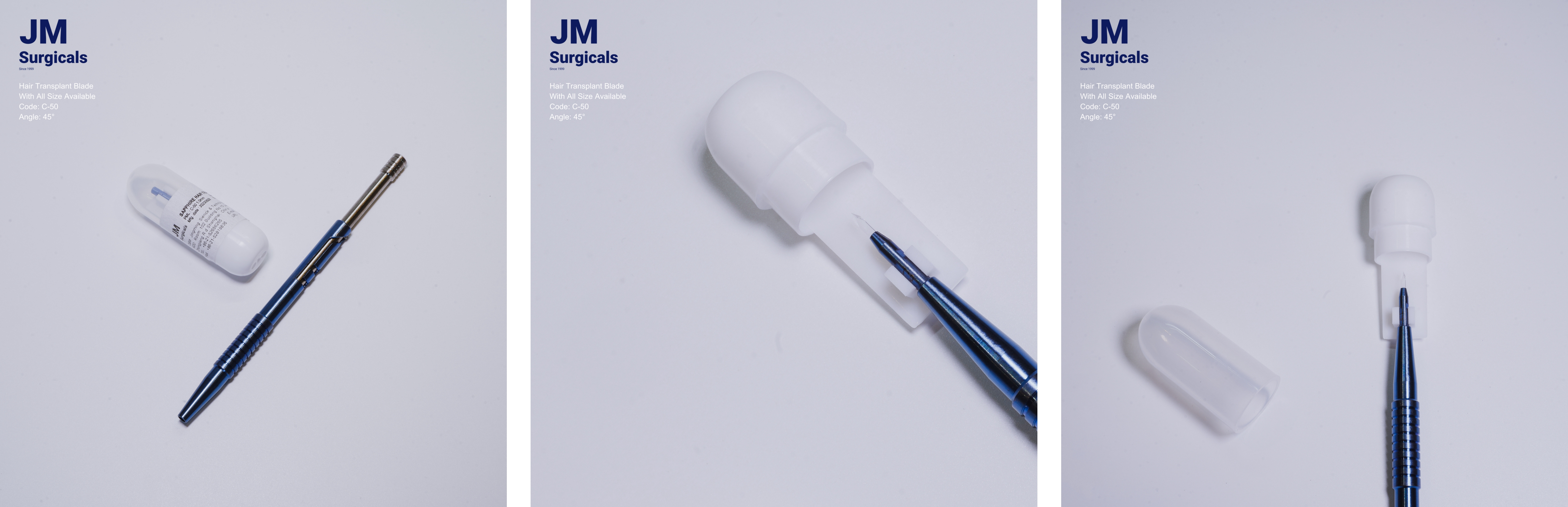
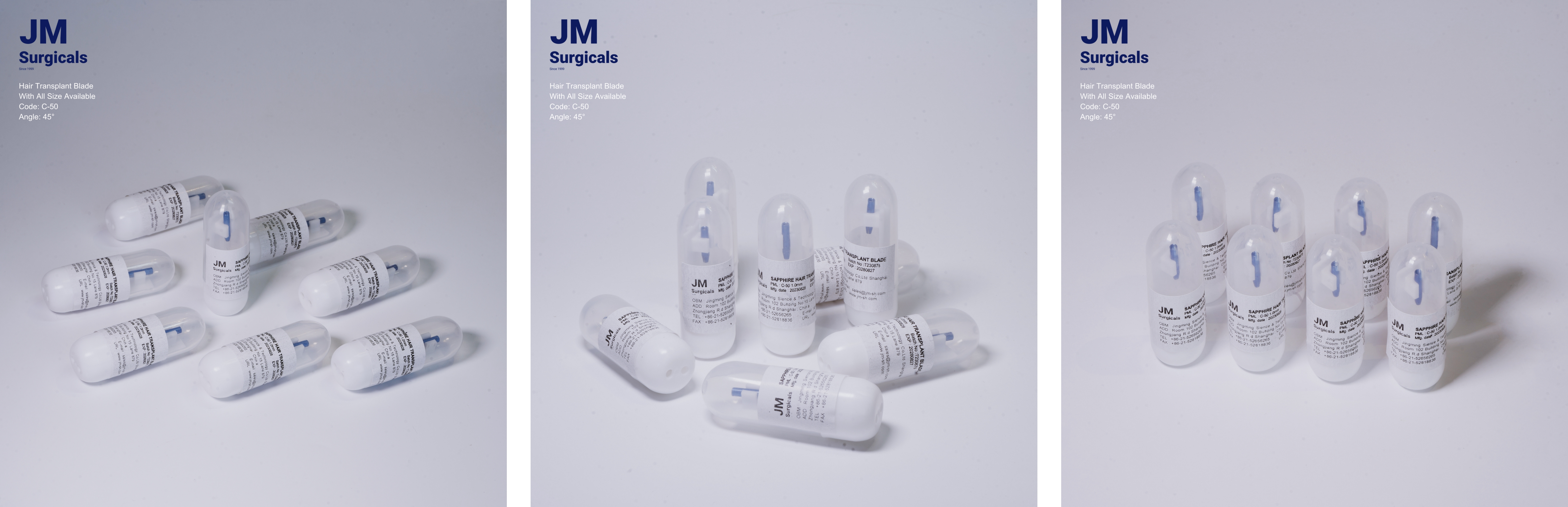
Recipient-site creation inside a dense-packing plan is where this ultra sharp fue blade does most of its work: high numbers of grafts per square centimetre, and the occasional follicular unit that came out larger than planned. Revision cases are the second home, where tissue that has already been operated on behaves differently under the blade. It also suits larger single follicular units, the crown and mid-scalp where coverage matters more than the finest possible hairline transition, and long sessions where hand fatigue sets in. Outside the clinic, research groups use it for tissue extraction in regenerative medicine work where a defined width and a clean cut matter. It is seldom the only blade on the tray — most teams pair it with a 0.9 mm or 1.0 mm for the hairline.
| Overseas minimum order | 100+ pieces |
| Lead time, 1–500 pieces | 10 days |
| Lead time, over 500 pieces | Negotiated for each order |
| Logo customization | 300 pieces minimum |
| Graphic customization | 1,000 pieces minimum |
| Packaging customization | 5,000 pieces minimum |
| Packaging | Neutral and custom packaging options |
| Manufacturing | In-house at our sapphire surgical blade factory in Shanghai |
| Warranty | 12 months |
| Shelf life | 5 years |
| After-sales support | Remote operation training |
Because we manufacture in-house, technical questions go straight to the engineers who build the instruments. JM Surgicals has been a surgical instrument manufacturer since 1999, with a team of more than 100 people, and we work alongside clinics, hospitals, private surgeons and distributors to match the right specification to each surgeon's technique and existing instruments — and to say honestly when a custom size, neutral packing or own-brand packing suits the order better. Support carries on after delivery: our team answers handling, sterilisation and reprocessing questions, helps troubleshoot anything that behaves unexpectedly, and turns custom requests around quickly. Tell us what you need to achieve and we will confirm what we can build for you.
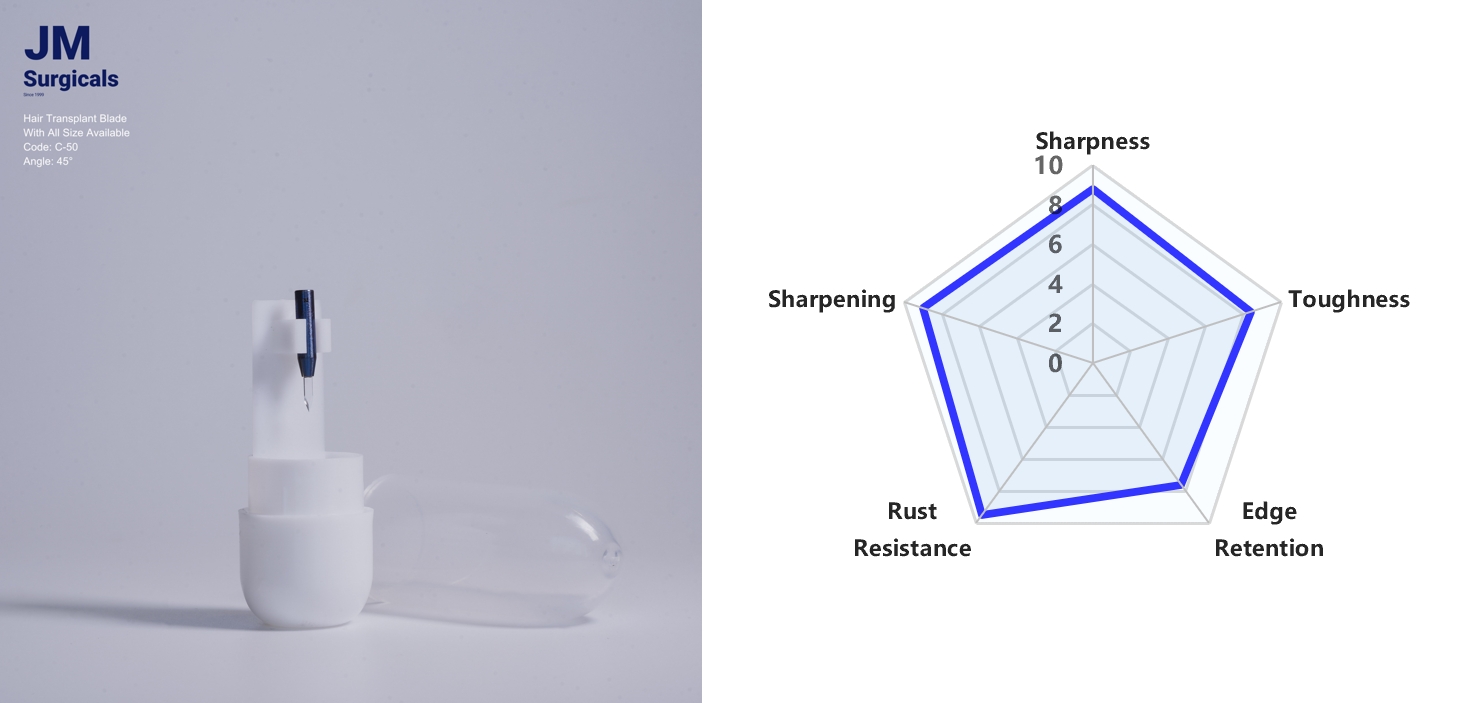
It is manufactured from high-hardness sapphire — a solid sapphire blade, not a steel blade with a coating on it. The material is chosen because it takes and holds a very fine edge, resists wear over repeated use, and does not corrode through autoclave cycles. Each sapphire hair transplant blade is hand-polished along the cutting edge before it is packed, and the finished blade body is transparent so you can see the edge clearly.
Steel starts sharp and loses that edge quickly, so a busy list means changing blades or pushing a dull one through the last cases. A sapphire fue blade is harder, so the cutting geometry lasts far longer and there is no coating to flake away. It also stays stable through repeated sterilisation. The trade-off is that sapphire is brittle at the extreme edge, so it rewards careful handling: keep it cased, do not lever it sideways in tissue, and check the edge before each case.
Each blade sits in a heat-resistant plastic case with a dust cover over it, in one of three case styles, so it can go through your normal sterilisation cycle without the case deforming around the edge. The case carries a printed label with the blade code and angle, and the cartons are sturdy cardboard so the case is not taking the whole shock of transit. Keep the case closed until the blade is needed and check that the dust cover is seated before you open it.
Yes. The family runs from 0.7 mm up to 1.7 mm. If your cases sit between two sizes, a custom size fue blade can be made to the width you want. Give us width, thickness, length and angle together when you specify, because they are made as a single specification rather than adjusted afterwards.
The full specification for this blade — dimensions, packaging and classification — is documented, and a specification sheet covering it can go straight into a supplier file or an internal audit record; ask your contact for the current version. The case label itself carries the blade code and angle for day-to-day checking.
Start with the label on the case: it carries the blade code and the angle, and the width is what separates a 1.3 mm case from a 1.2 mm one at a glance. Then look at the blade through the clear cover to confirm the edge is intact and the blade is seated properly in its holder. If anything does not match the order, keep the case sealed and set it aside rather than putting the blade into a tray.
Both angles are available on every blade. The angle decides how the slit sits relative to the skin surface: the shallower 45° gives a more oblique channel, while the steeper 60° stands the incision up more. Most surgeons settle on one as their default and keep the other for specific regions or techniques, so many teams hold both and choose per case rather than ordering a single angle for the whole year.