• JM Surgicals | 1.2mm Sapphire Hair Transplant Blade C-50 | Precision FUE Blade, Ultra-Sharp, Scalp Microblades
  • JM Surgicals | 1.2mm Sapphire Hair Transplant Blade C-50 | Precision FUE Blade, Ultra-Sharp, Scalp Microblades
  • JM Surgicals | 1.2mm Sapphire Hair Transplant Blade C-50 | Precision FUE Blade, Ultra-Sharp, Scalp Microblades
  • JM Surgicals | 1.2mm Sapphire Hair Transplant Blade C-50 | Precision FUE Blade, Ultra-Sharp, Scalp Microblades
  • JM Surgicals | 1.2mm Sapphire Hair Transplant Blade C-50 | Precision FUE Blade, Ultra-Sharp, Scalp Microblades
  • JM Surgicals | 1.2mm Sapphire Hair Transplant Blade C-50 | Precision FUE Blade, Ultra-Sharp, Scalp Microblades
  • JM Surgicals | 1.2mm Sapphire Hair Transplant Blade C-50 | Precision FUE Blade, Ultra-Sharp, Scalp Microblades
  • JM Surgicals | 1.2mm Sapphire Hair Transplant Blade C-50 | Precision FUE Blade, Ultra-Sharp, Scalp Microblades

JM Surgicals | 1.2mm Sapphire Hair Transplant Blade C-50 | Precision FUE Blade, Ultra-Sharp, Scalp Microblades

No.PTC501200001
Product Name:
1.2mm Sapphire Hair Transplant Blade

Product Type:
FUE Hair Transplant Tool  

Features:
Ultra-Sharp Sapphire Blade

The 1.2mm sapphire hair transplant blade offers precise follicle extraction with ultra-sharp edges, ideal for surgeons needing a low trauma hair transplant blade or a custom size fue blade for enhanced outcomes.



Model
C-50
Angle
45°, 60°
Width
1.2mm
Length
4.5mm,5.0mm,5.5mm
Thickness
0.25mm
  • JM Surgicals | 1.2mm Sapphire Hair Transplant Blade C-50 | Precision FUE Blade, Ultra-Sharp, Scalp Microblades
  • JM Surgicals | 1.2mm Sapphire Hair Transplant Blade C-50 | Precision FUE Blade, Ultra-Sharp, Scalp Microblades
  • JM Surgicals | 1.2mm Sapphire Hair Transplant Blade C-50 | Precision FUE Blade, Ultra-Sharp, Scalp Microblades
  • JM Surgicals | 1.2mm Sapphire Hair Transplant Blade C-50 | Precision FUE Blade, Ultra-Sharp, Scalp Microblades

Description

At 1.2 mm, the Channel Leaves Room for the Graft

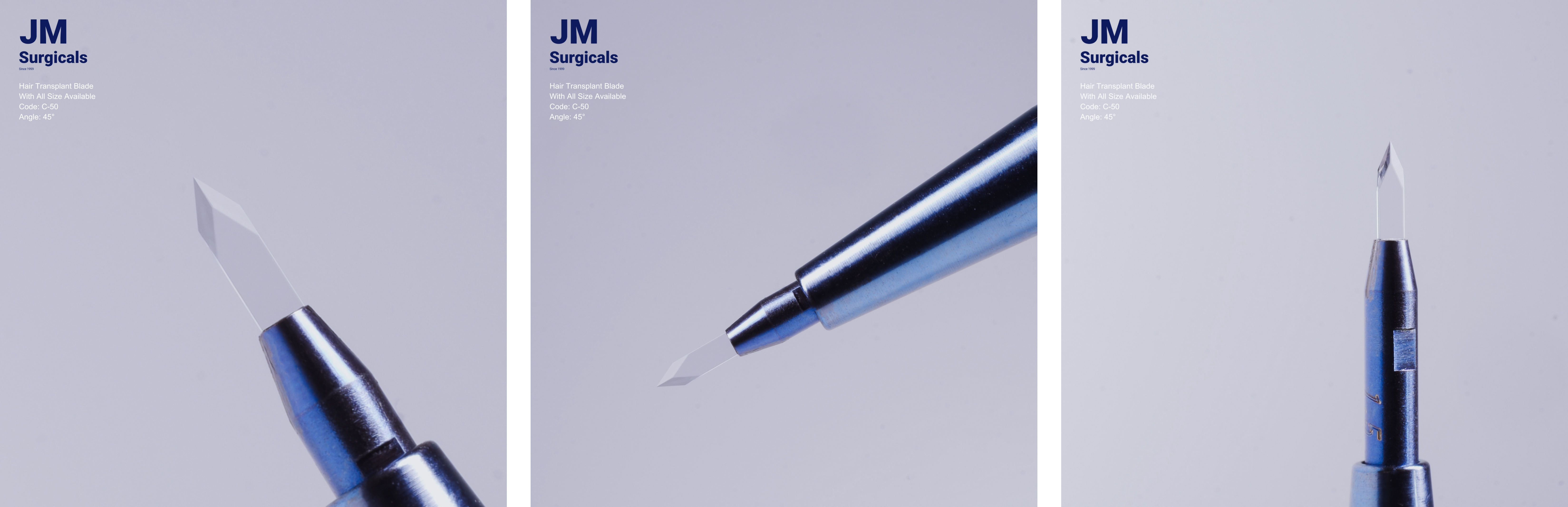
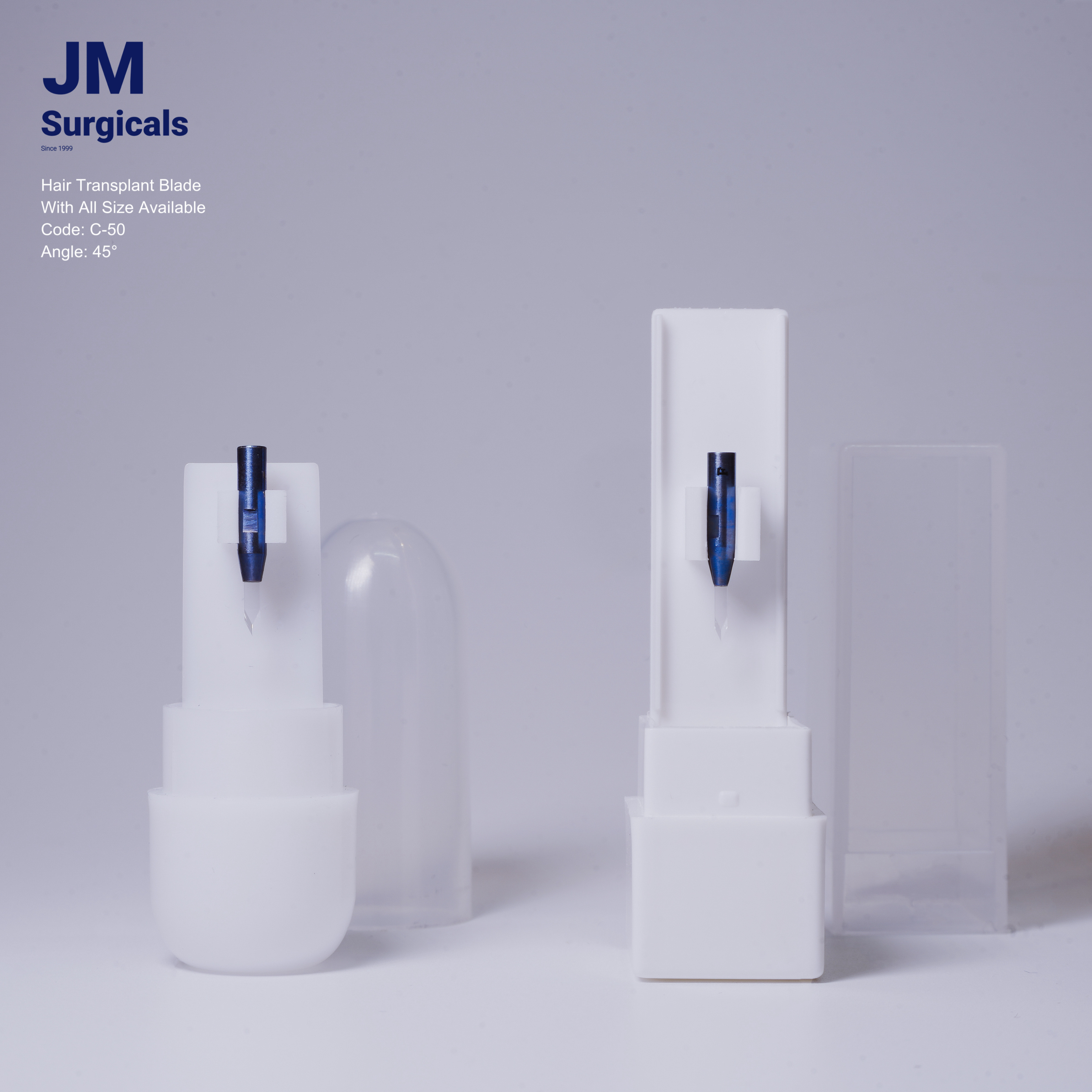
Hair transplant blade product image.

The C-50 opens a channel with clearance for the graft instead of compressing it on the way out. The thin blade keeps the pass light even though the opening is wider than the tighter widths. The edge is polished sapphire, which lets the cut open cleanly rather than drag at the entry point.

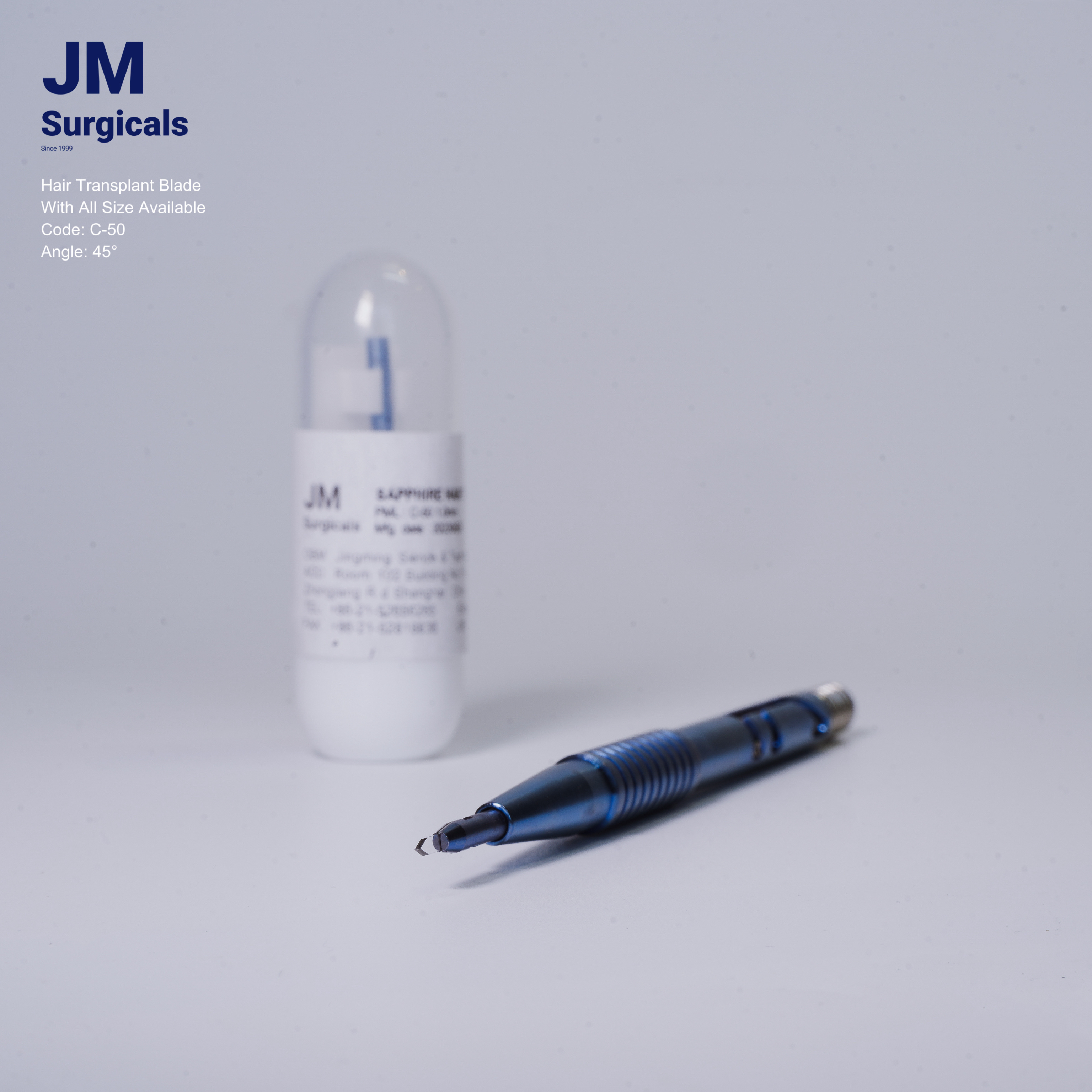
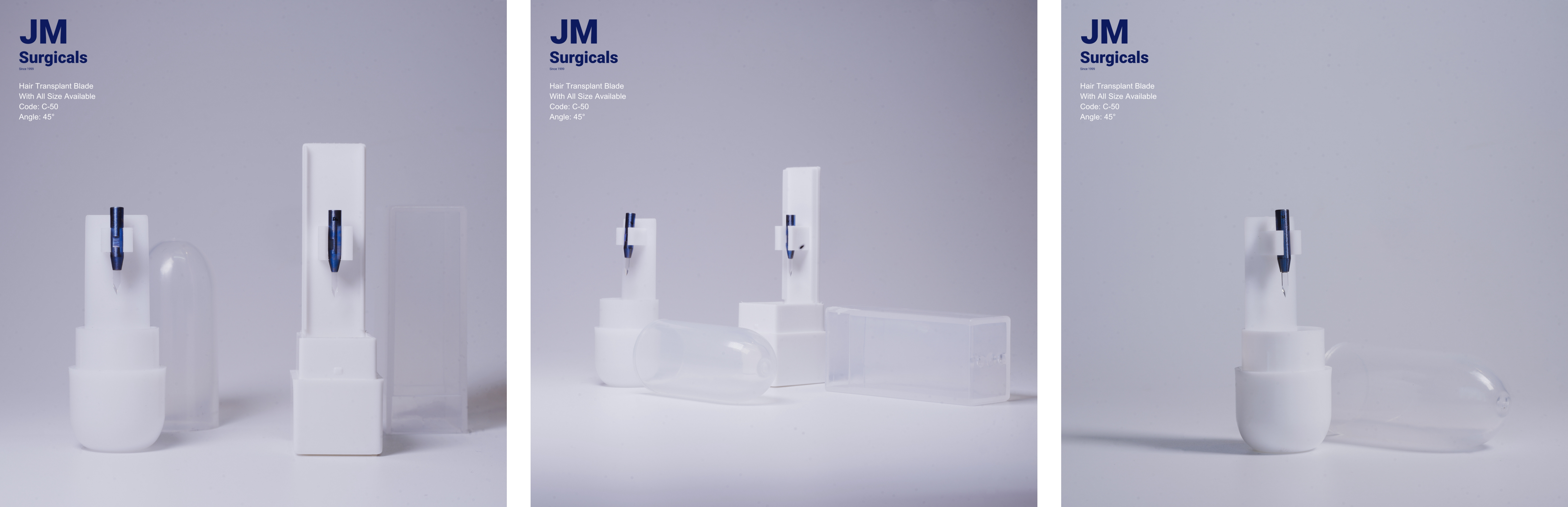
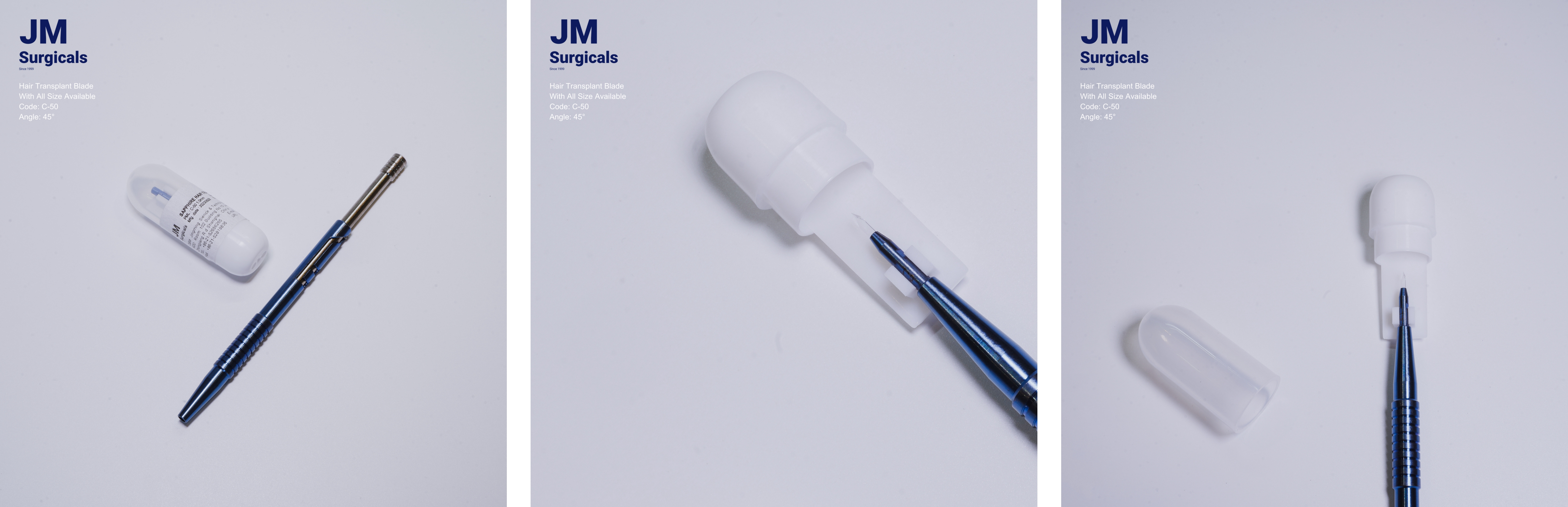
Each blade arrives seated in a white protective holder under a clear cap, in a heat-resistant case with a dust cover. Handles are supplied in blue or silver, and the transparent blade keeps the tip readable under the microscope. We make the C-50 in our own sapphire surgical blade factory, so the width, length and angle follow the specification on your order.

This is a surgical instrument for FUE hair restoration and microsurgical tissue harvesting; it is not intended for salon use or at-home treatments.

C-50 1.2 mm Specification

Specification Detail
Model C-50
Blade width 1.2 mm
Blade thickness 0.25 mm
Blade lengths 4.5 mm, 5.0 mm, 5.5 mm
Cutting angles 45° and 60°
Material High-hardness sapphire
Edge finish Hand-polished edge; transparent blade
Handle options Blue or silver
Blade holder White protective holder with clear cap
Case Heat-resistant plastic case with dust cover
Case styles Three styles available
Intended use FUE hair restoration and microsurgical tissue harvesting
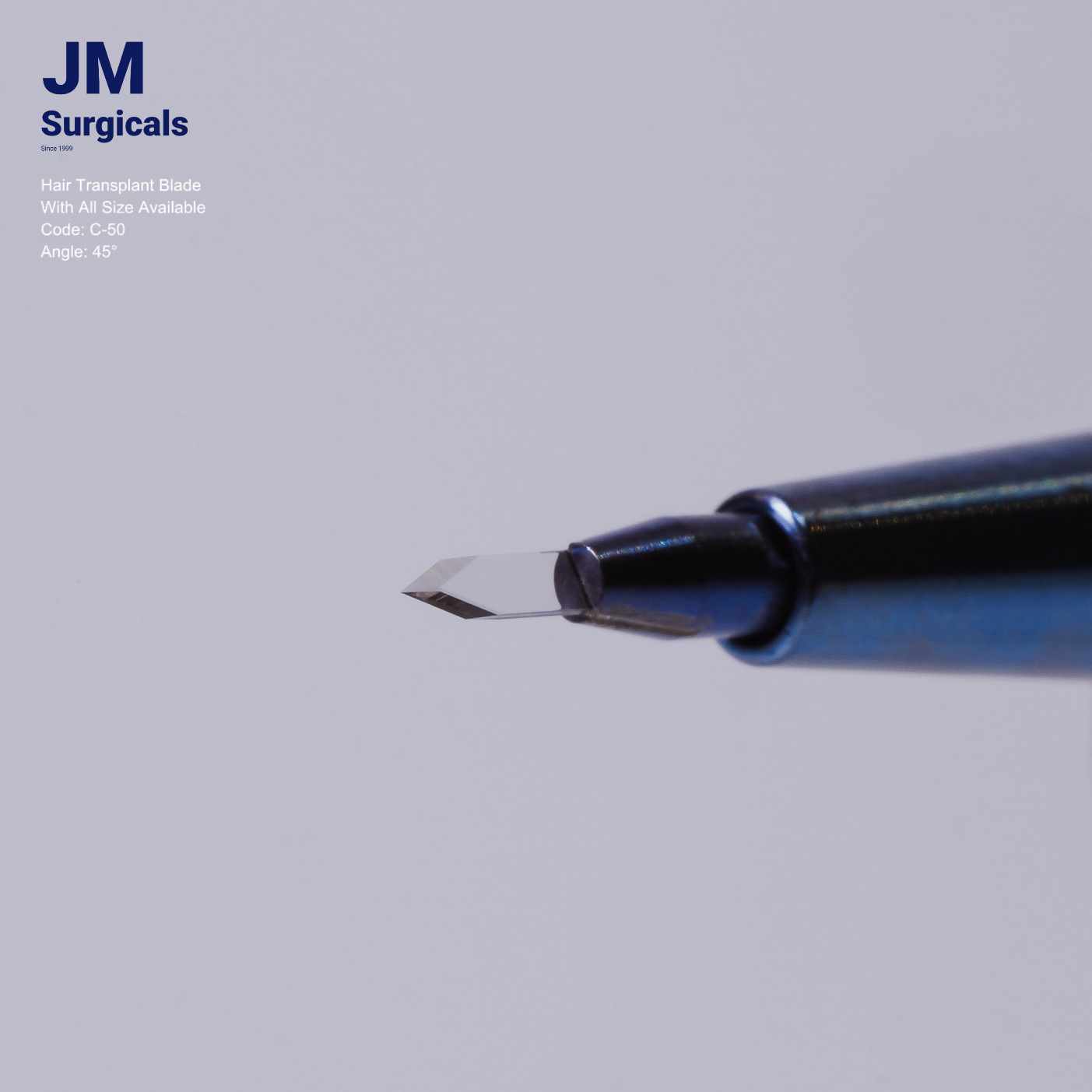
Close-up of blue hair transplant blade with fine angled edge.

How 1.15 mm, 1.2 mm and 1.3 mm Differ

  • 1.15 mm: the in-between size for clinics that find 1.1 mm slightly tight and 1.2 mm slightly wide. It gives a little more room than 1.1 mm without moving into the wider-channel feel.
  • 1.2 mm: the wider-channel option in this part of the ladder. It accepts larger graft units with less compression and keeps cutting resistance low through the thin blade.
  • 1.3 mm: the widest standard size in this batch. It gives the most room and a sturdier feel in the channel, and it is the choice when the case needs clearance above what 1.2 mm provides.

Sapphire Edge Behaviour in a Wider Channel

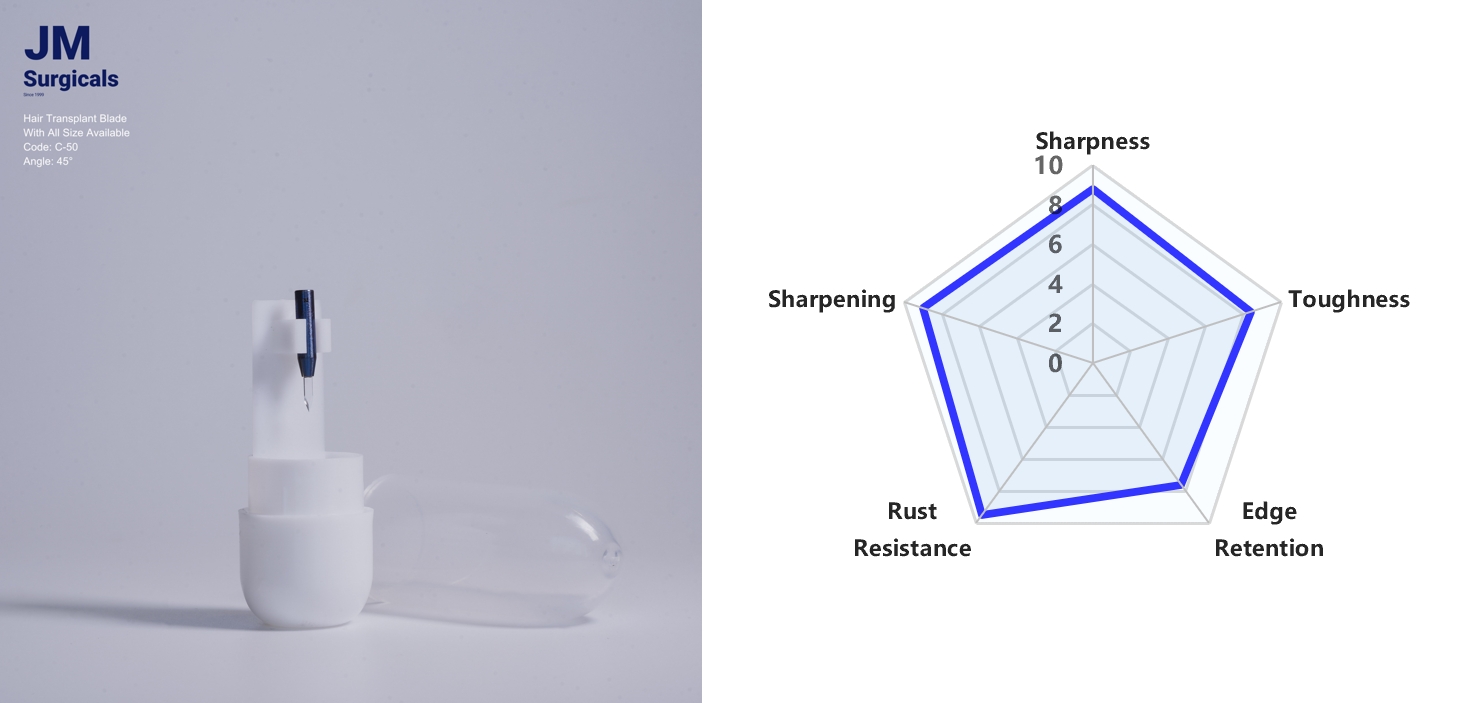
Hair transplant blade in holder beside performance radar chart.

Sapphire is used for its hardness and its ability to hold a polished edge. On a wider channel, that matters because the blade is doing more than parting tissue: it is opening a space that has to stay clean for the graft. A dull edge on a blade this wide shows up as drag on entry and a channel that wants a second pass.

The blade thickness is a deliberate balance. It is thin enough to slice rather than push, and rigid enough not to wander off the line the surgeon has set. Together with the wider opening, that is what gives this width its lower cutting resistance.

Every edge is hand-polished along its full length. An edge that is sharp at the heel and dull at the tip is worse than one that is consistently good all the way through, because it forces a second pass and defeats the purpose of a low trauma hair transplant blade.

We finish that edge in our own sapphire surgical blade factory rather than buying in a re-labelled blade. The sapphire also resists corrosion through repeated autoclave cycles, so the edge that comes back to the sterile field is the one that went in.
Dense Packing and Larger Graft Units

  • Dense recipient zones: where the plan calls for close spacing over a large area, the wider channel accepts each graft without compressing it. Teams running high density FUE blade protocols often load this width for the denser zones and change to a narrower blade at the hairline.
  • Multi-hair graft units: a narrow blade can drag or squeeze a larger unit on the way out. The clearance at 1.2 mm lets the graft come free without being reshaped by the instrument that removed it.
  • Recipient-site channel opening: teams that open channels with the C-50 family can stay with the same instrument from harvesting through to site creation. The 45° and 60° options let them keep the angle they already work at.
  • Microsurgical and regenerative research: laboratories harvesting follicle and scalp tissue use the blade where reproducible micro-incisions matter more than speed.
  • Mixed-width sessions: many surgeons keep this width alongside a narrower blade on the tray and switch as graft size and target density change within the same session.

Care Between Cases

  1. Keep the blade in its heat-resistant case with the dust cover on until the sterile field is ready. The edge should not be exposed to the room longer than necessary.
  2. Inspect under magnification before mounting: a uniform edge along the full length, no chip at the tip, and no residue from the previous cycle.
  3. Seat the blade square in the handle. A blade that is not square cuts at an angle nobody chose, and the error shows up in the channel rather than in the instrument.
  4. Keep the tip out of the tray and away from other instruments during the case. Most edge damage happens between passes, not in tissue.
  5. Clean the blade the way you clean your other instruments, holding the shank rather than the edge, and keep abrasive pads away from the blade face.
  6. Re-case it with the dust cover and store it flat and dry. Protecting the edge between cases is what keeps the low trauma hair transplant blade performing as it should at the next session.
  7. Write the width, length and angle on the case label before it goes back on the shelf, so the next surgeon picks up the right blade without opening three boxes.
Blue hair transplant blade upright in white holder with clear cover.Hair transplant blade with blue handle in clear protective capsule.

Supply Details for Clinic and Distributor Orders

Item Detail
Minimum order (overseas) 100+ pieces
Packaging Neutral and custom packaging options
Logo customisation From 300 pieces
Graphic customisation From 1,000 pieces
Custom packaging From 5,000 pieces
Production time, 1–500 pieces About 10 days
Production time, above 500 pieces Confirmed with your order
Warranty 12 months
Shelf life 5 years
After-sales support Remote operation training
Quality system reference ISO 13485
Device classification Class I
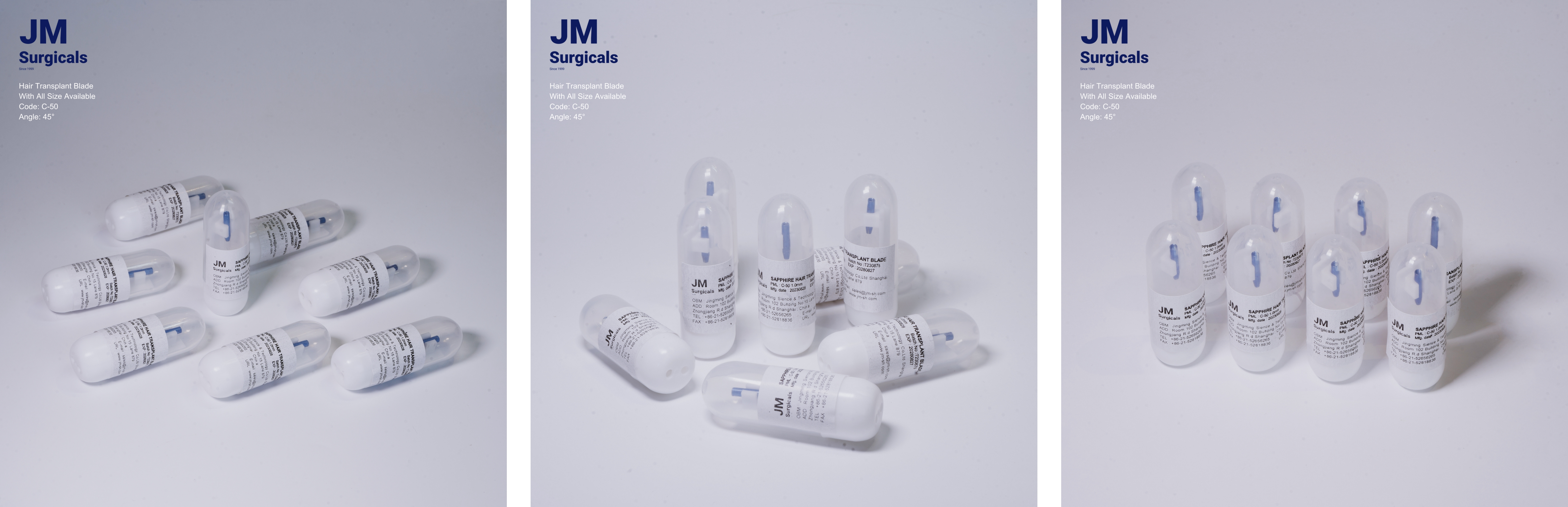
Packaged hair transplant blades in clear printed capsules.

Engineering Support & Specification Matching

Because we manufacture in-house at our sapphire surgical blade factory, technical questions go straight to the engineers who build the instruments. JM Surgicals has been a surgical instrument manufacturer since 1999, with a team of more than 100 people.

We work alongside clinics, hospitals, private surgeons and distributors to match the right specification to each surgeon's technique and existing instruments. That includes saying honestly when a custom specification, neutral packing or own-brand packing suits the order better.

Support carries on after delivery: our team answers handling, sterilisation and reprocessing questions, helps troubleshoot anything that behaves unexpectedly, and turns custom requests around quickly. Tell us what you need to achieve and we will confirm what we can build for you.

Handle Fit & Compatibility

  • One shank across the range: every C-50 width, from 0.7 mm to 1.7 mm, mounts on the same shank. A handle that takes one C-50 blade takes the others, so a clinic does not need a second fitting when it adds a width.
  • The fit that decides it: seat depth and locking method — collet, set screw or push fit. Two handles from the same brand can differ here, so we check the specific model rather than the brand name alone.
  • What to send us: the handle brand and model, a close photo of the empty opening with a ruler laid across it, and the locking type. Our engineers reply with whether our shank seats directly or needs a different seat depth.
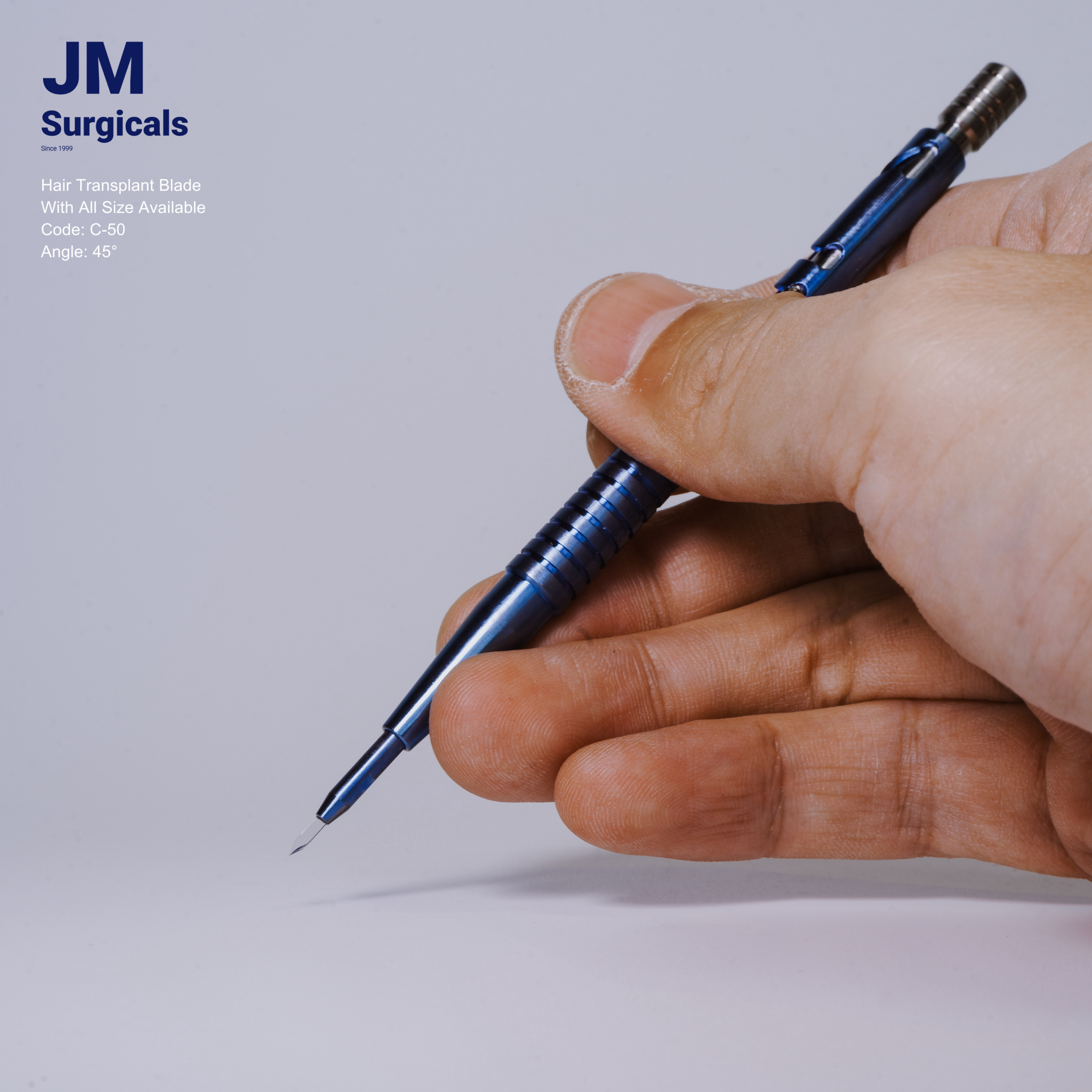
  • Handles we supply: blue or silver, with a grip shaped to reduce hand fatigue over long cases. Order them with the blades if your current handles are a different system, or keep a spare set for a second surgical chair.
  • Length and angle clearance: every blade length and both cutting angles use the same mount, but check that your handle's guard or opening clears the length you specify before you commit to a full case quantity.
  • Where it will not fit: handles with a proprietary quick-release chuck that grips a different shank profile, or an opening narrower than the shank. We will tell you before the order ships rather than send blades that cannot be mounted.
  • Distributor catalogues: tell us the handle range you stock and we will confirm which widths, lengths and angles seat in each, so the blades and handles you list stay matched for your clinic customers.

Technical Support & Model Matching

Because we manufacture in-house, technical questions go straight to the engineers who build the instruments. JM Surgicals has been a surgical instrument manufacturer since 1999, with a team of more than 100 people, and we work alongside clinics, hospitals, private surgeons and distributors to match the right specification to each surgeon's technique and existing instruments — and to say honestly when a custom size, neutral packing or own-brand packing suits the order better. Support carries on after delivery: our team answers handling, sterilisation and reprocessing questions, helps troubleshoot anything that behaves unexpectedly, and turns custom requests around quickly. Tell us what you need to achieve and we will confirm what we can build for you.

FAQ

Q1. How does the 1.2 mm width behave compared with 1.0 mm or 1.3 mm?

The 1.2 mm Sapphire Hair Transplant Blade C-50 opens a wider channel than 1.0 mm or 1.1 mm and a slightly narrower one than 1.3 mm. The extra room lowers resistance through the pass and suits larger graft units or denser packing. The blade thickness stays the same, so the change you feel is the channel, not the rigidity of the blade.

Q2. Which cutting angle should we specify, 45° or 60°?

Both angles are available in the 1.2 mm width. The 45° edge meets the tissue at a shallower angle; the 60° edge sits more upright for a steeper approach. Match the angle your team already uses for slit or channel work. Clinics standardising a high density FUE blade protocol often keep both angles on the shelf and compare them on a test case before committing.

Q3. What is the sapphire edge like, and how does it hold up after sterilisation?

The edge is hand-polished along its full length and set in high-hardness sapphire. Sapphire resists corrosion and keeps its shape through repeated autoclave cycles, so the blade returns to the field without the edge rolling over. The blade is transparent, which keeps the tip visible against tissue under the microscope. That consistent edge is what a low trauma hair transplant blade depends on.

Q4. Can you make a width or length outside the standard list?

Yes. A width, length or angle outside the standard C-50 list can be produced as a custom size FUE blade. Send the exact measurement and we will confirm tooling and schedule before production. The sapphire edge, case and handle fit stay the same as the standard line.

Q5. How should the blade be cleaned and sterilised between cases?

Use your clinic's validated autoclave cycle. The blade and its heat-resistant plastic case are built to go through repeated high-temperature cycles without deformation. Keep the blade in its case with the dust cover on between cycles, clean it with a neutral instrument detergent, and avoid abrasive pads on the blade face. Inspect the tip under magnification before the next case and retire any blade with a nick or a dulled edge.

Q6. Will the C-50 blade fit the handle system we already use?

The C-50 shank is the mounting end that goes into the handle, and the same shank is used across the width ladder, so a handle that takes one C-50 width takes the others. Send the brand and model of your handle, a close photo of the empty opening with a ruler across it, and how it locks — collet, set screw or push fit — and we will confirm whether our shank seats directly, needs a different seat depth, or will not fit.
Download

We use Cookie to improve your online experience. By continuing browsing this website, we assume you agree our use of Cookie.