
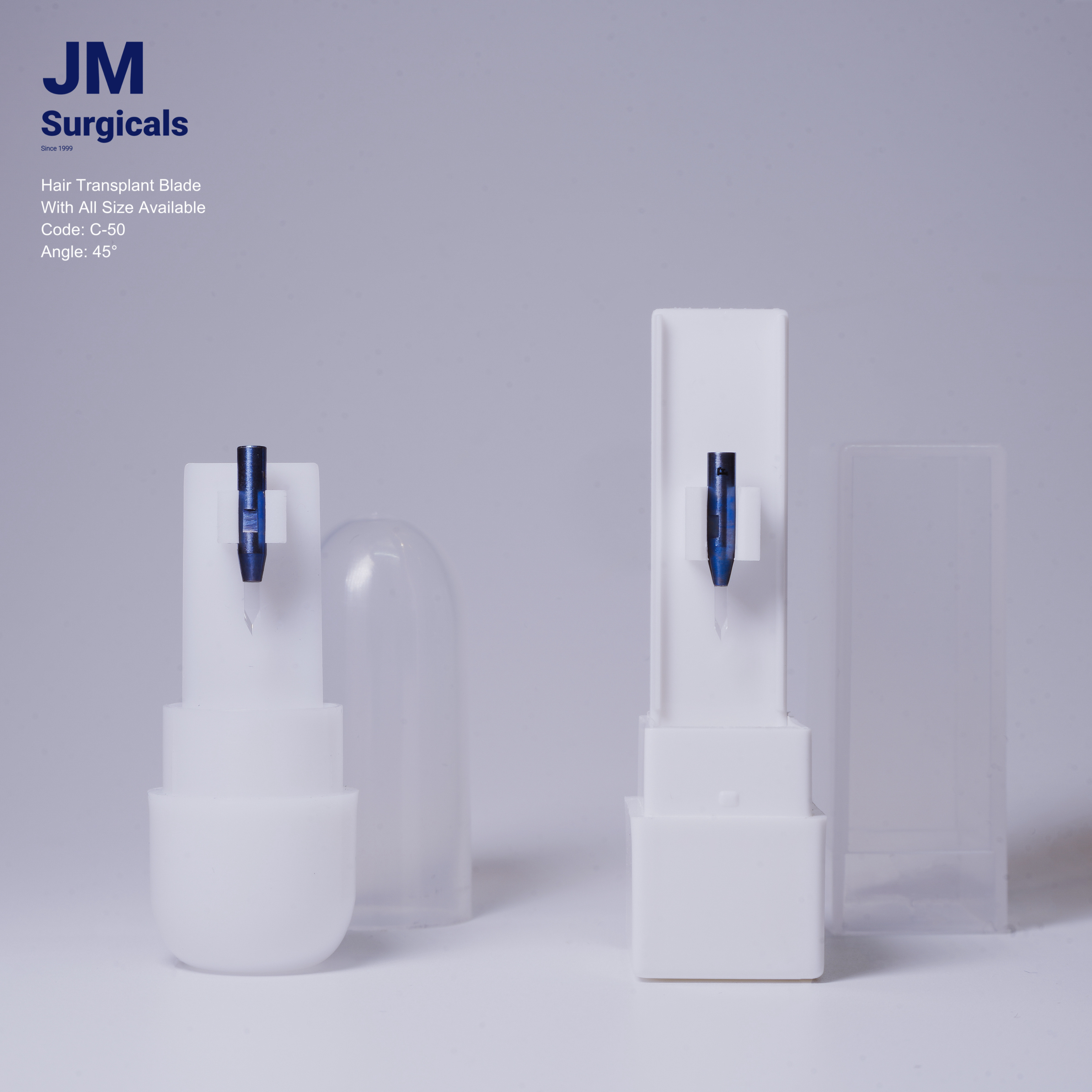
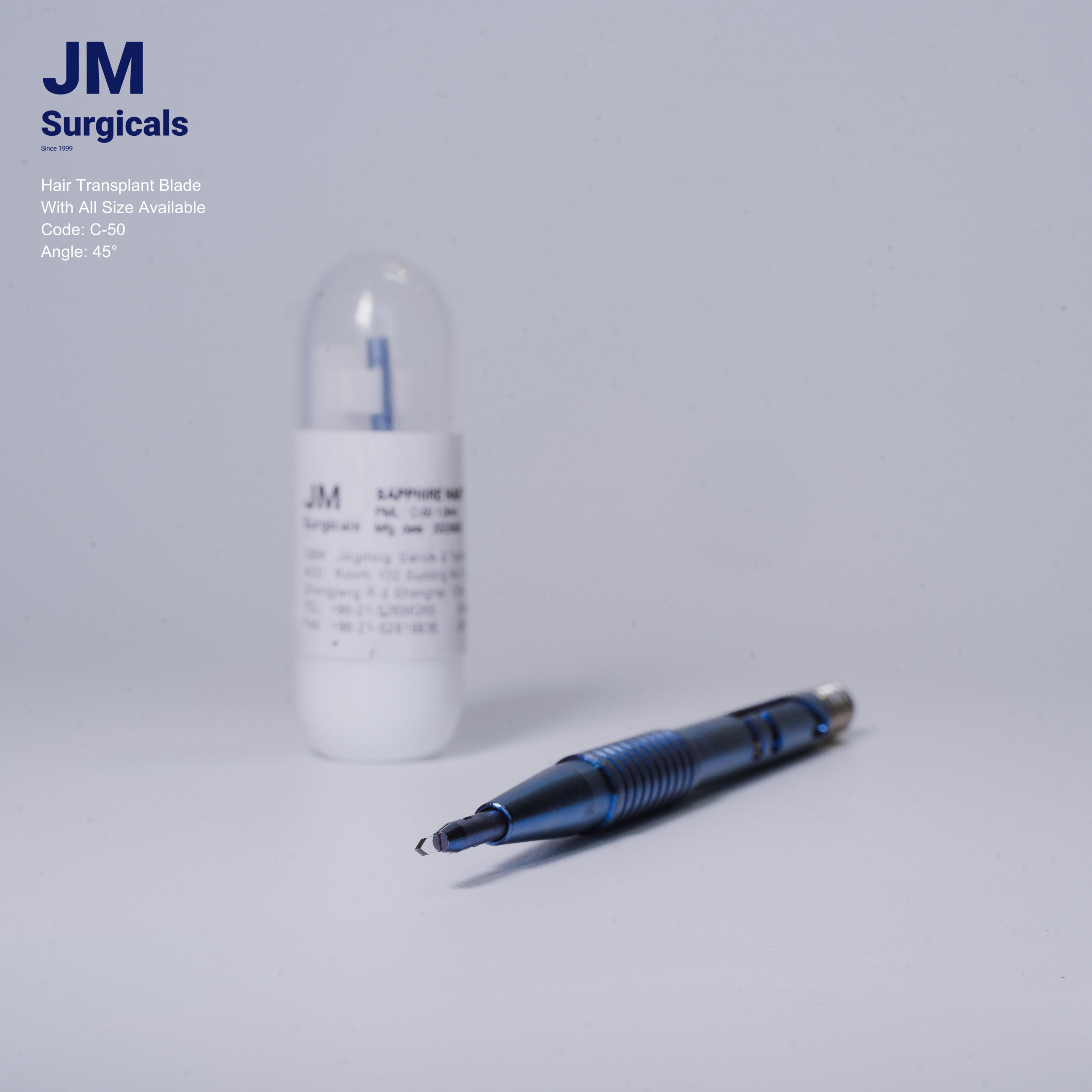
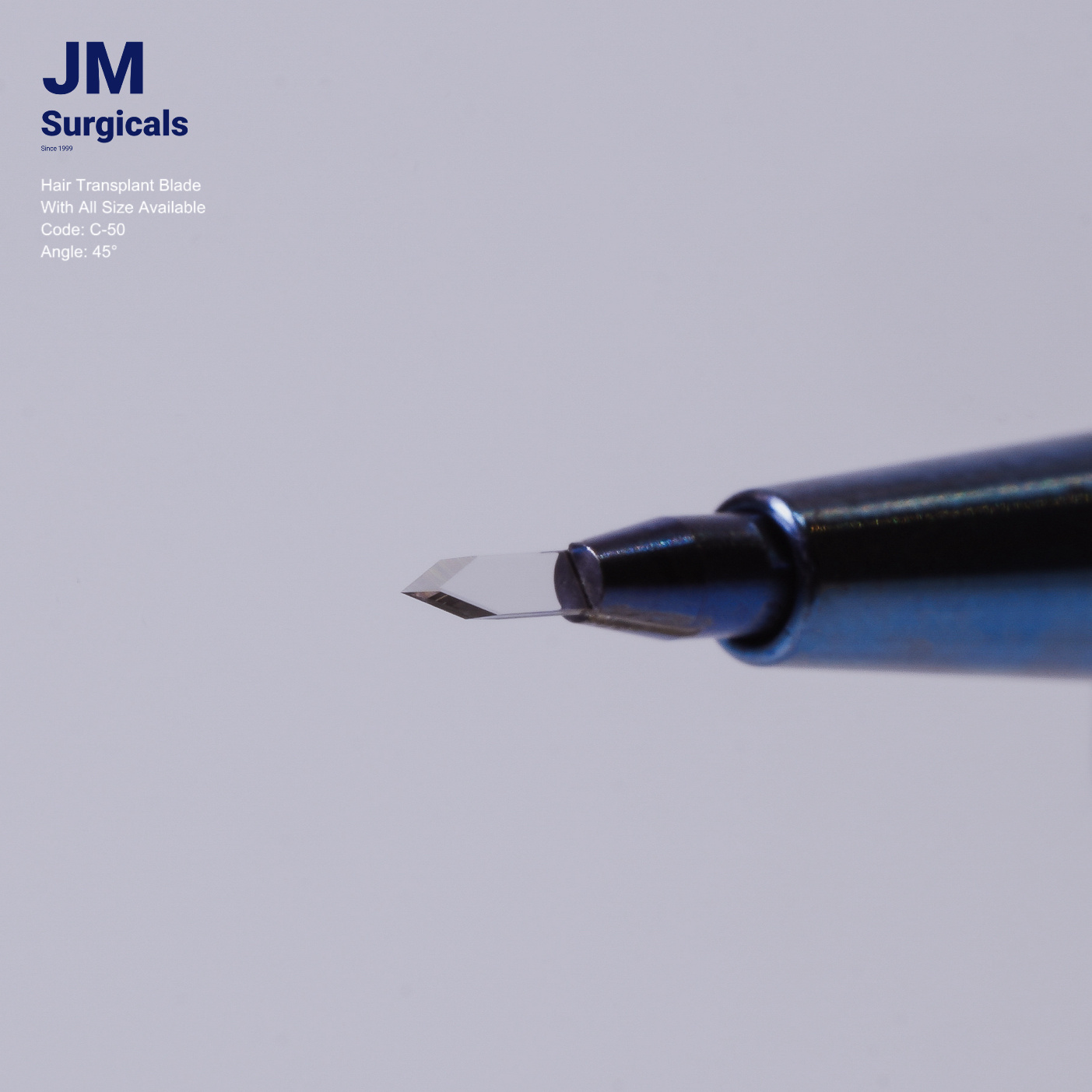
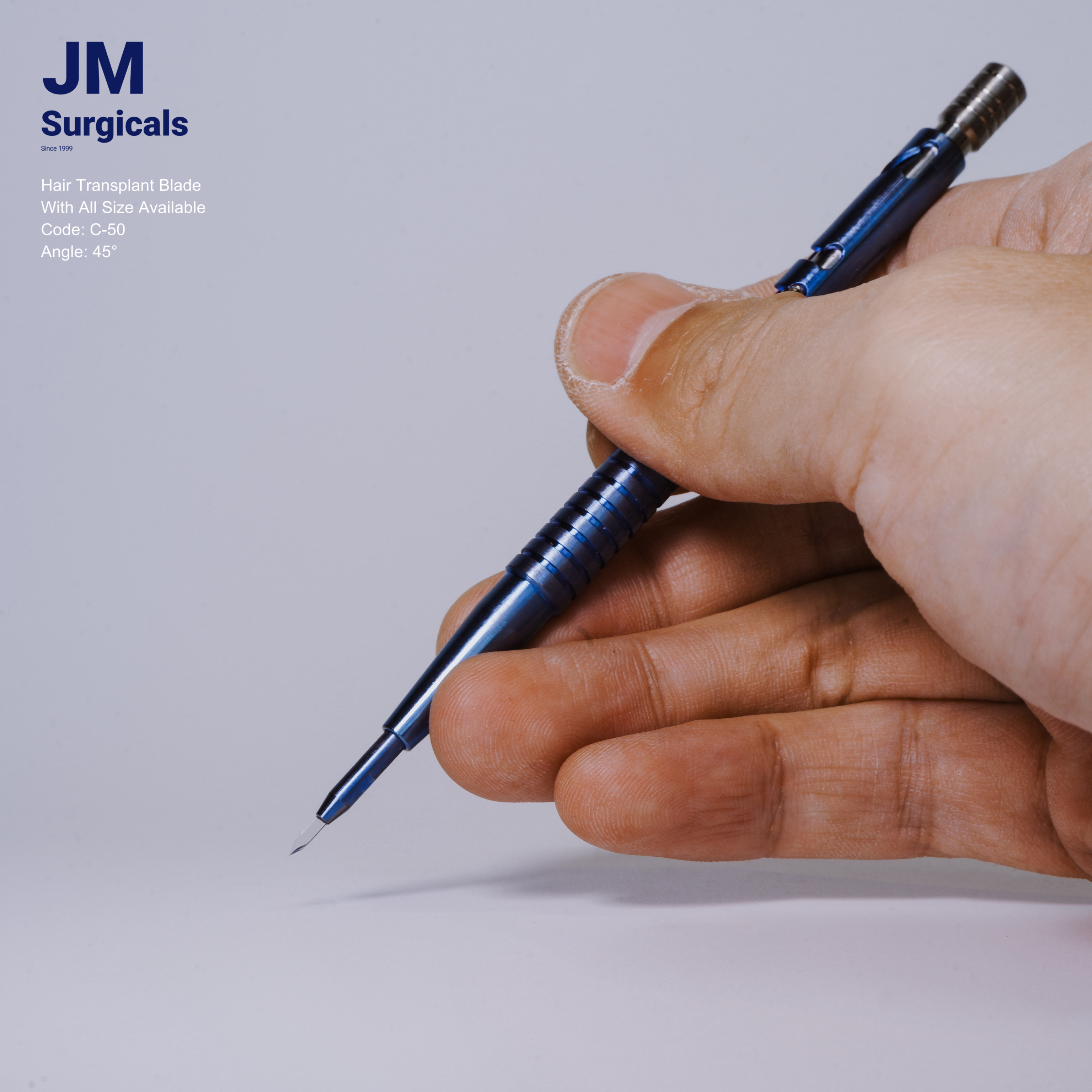
The 1.25mm Sapphire Hair Transplant Blade offers exceptional precision and durability for FUE procedures. Crafted as a custom sapphire surgical blade, this ultra sharp FUE blade ensures minimal tissue trauma and enhanced surgical outcomes.


Fine recipient-site work asks something different of a blade than wide channel opening does: the incision has to stay small, the edge has to cut the same way on the last graft as on the first, and the tip has to sit in the hand without any give. This sapphire hair transplant blade is the narrowest width we build in this family, and it is made for exactly that kind of work — dense packing areas, hairline detail, and any recipient site where a compact slit places more cleanly than a broad one.
The cutting edge is ground from high-hardness sapphire and polished by hand, then set on a thin blade body. Sapphire is corrosion resistant and keeps its geometry through repeated sterilization cycles, so the angle you set up with at the start of a list is still the angle you are working with at the end of it. Blades mount into pen-style handles with a chuck.
Clinics that run mixed FUE lists usually keep more than one width on the shelf, and this one sits at the fine end of that set. Research and training groups use it where they need a reproducible micro incision for tissue sampling work. It is made in our own sapphire surgical blade factory in Shanghai, so questions about edge geometry, angle or presentation — and any request for a custom size FUE blade — go to the people who grind and polish the blade rather than to a reseller.

| Product type | FUE hair transplant blade |
| Model | C-50 |
| Part number | PTC501250001 |
| Material | High-hardness sapphire |
| Blade width | 1.25 mm |
| Blade thickness | 0.25 mm |
| Blade lengths | 4.5 mm, 5.0 mm, 5.5 mm |
| Cutting angles | 45°, 60° |
| Edge finish | Hand-polished |
| Handle compatibility | Pen-style handle with chuck; blue or silver ergonomic handles available |
| Sterilization | Reusable through repeated autoclave cycles |
| Shelf life | 5 years |
Width. At the finest cutting width in the range, this blade suits surgeons who work to compact recipient sites and want the smallest possible incision footprint. If you prefer a wider channel, or a blade with more body behind the edge for channel opening, the two wider versions of the same sapphire hair transplant blade cover that end of the line, and all three share the same material, thickness and angle options — width is the variable.
Length. The blade comes in three lengths. The shortest keeps the tip close to the handle, which many surgeons prefer for shallow, controlled sites; the longest gives more reach when the working area is dense and you want the cutting edge clear of the handle. Stocking one length for most cases and the longest for dense work is a practical compromise.
Angle. The flatter setting lays the blade closer to the scalp; the more upright setting stands it up. Most teams settle on one as standard and keep the other for particular patients. Both are available in every length, so you can order to your own protocol rather than to whichever combination happens to be packed.
Custom sizes. If your technique sits outside the standard set, a custom size fue blade can be built to your width, length or angle. Send the specification you want in writing and we will confirm what we can hold to on repeat orders before anything goes into production.


If your facility runs a cycle outside standard steam autoclave practice, tell us the parameters before you order and we will confirm suitability rather than leave you to find out in the sterilizer. For most clinics the practical result is an ultra sharp FUE blade that can be reused across a defined number of cases, which reduces how often the shelf has to be restocked.
Distributors and clinic groups who sell under their own name make up a large part of what we produce. Your artwork can go on the case and on the outer carton, and we proof it with you before production rather than after, so the first batch that ships is one you can invoice straight away. Blades can also be packed plainly for distributors who finish the branding in their own market.
Specification is where private label usually goes wrong. A blade built to your drawing stays the same on the second order as on the first, because the measurement is held on file with your account rather than re-derived each time. Orders that mix the narrow, mid and wide widths in this family are routine, and they are built to a single purchase order so the case labels and lot records stay consistent across the whole set.
We are a precision surgical blade manufacturer rather than a trading house. Grinding, polishing and packing happen under one roof, which is what allows a specification to be repeated across batches instead of drifting between suppliers. If your catalogue needs a width or angle that is not in the standard range, tell us the working dimension and we will say plainly whether it can be built.
| Minimum order, overseas | 100+ pieces |
| Packing | Neutral and custom packaging options |
| Customized logo | from 300 pieces |
| Graphic customization | from 1,000 pieces |
| Customized packaging | from 5,000 pieces |
| Lead time, 1–500 pieces | around 10 days |
| Lead time, above 500 pieces | agreed case by case |
| Warranty | 12 months |
| After-sales support | remote operation training |
| Sample and trial requests | ask your sales contact about availability |
| Payment and shipping terms | confirmed with your sales contact |


Every shipment can travel with the paperwork a clinic or a distributor actually needs. The order specification sheet lists the width, thickness, length and angle held for that batch, so whoever receives the goods can check them against what was ordered without opening a case.
Quality documentation is available on request. Our quality management follows ISO 13485 medical device practice, and we will send the current certificate together with the market-specific documents your registration or import clearance requires. Tell us the destination country before the order and we will confirm what we can supply, rather than leaving the question to be answered at customs.
Behind the paperwork sits a sapphire surgical blade factory that keeps lot records against every batch. That matters when a clinic has to trace a batch months later, or when a distributor's own customer asks for evidence of manufacture. For private-label orders the approved artwork proof becomes part of that file, so a reprint matches the first run.
We would rather be asked for a document we do not hold than have a shipment stopped at a border. As a precision surgical blade manufacturer working with clinics and distributors across Europe, the Middle East and the Americas, we are used to those questions — send yours before the order and we will put the answer in writing.
Because we manufacture in-house, technical questions go straight to the engineers who build the instruments. JM Surgicals has been a surgical instrument manufacturer since 1999, with a team of more than 100 people, and we work alongside clinics, hospitals, private surgeons and distributors to match the right specification to each surgeon's technique and existing instruments — and to say honestly when a custom size, neutral packing or own-brand packing suits the order better. Support carries on after delivery: our team answers handling, sterilisation and reprocessing questions, helps troubleshoot anything that behaves unexpectedly, and turns custom requests around quickly. Tell us what you need to achieve and we will confirm what we can build for you.
Blade width, length and angle can be built to your specification through our made-to-specification programme, and the presentation can be branded at the same time — logo marking on the case, printed graphics and your own packaging design. Artwork is proofed and approved before production starts, and the dimensions are written into the order file so a repeat batch matches the first.
The body and cutting edge are high-hardness sapphire, ground to the ordered angle and then polished by hand. A sapphire hair transplant blade is supplied as a clear blade with blue or silver ergonomic handle options; the material is corrosion resistant and holds its edge through repeated sterilization cycles instead of dulling like steel.
Each blade sits in a high-temperature resistant plastic case under a dust cover, and the cases are packed into sturdy cardboard cartons for transport. The case is built to hold its shape through high-temperature sterilization, so the ultra sharp FUE blade arrives with its edge intact and stays covered until it is seated. Three case styles are available — tell us which presentation suits your workflow.
The 45° sets the blade at a flatter approach to the scalp; the 60° stands it more upright. Most surgeons settle on one as their standard and keep the other for particular cases rather than switching throughout a list. Because both angles are available in every length, you can order to the angle your team is trained on and add the other for individual patients without changing anything else in the kit.
Length changes how much blade sits ahead of the handle. The shortest keeps the tip close for shallow, controlled sites; the longest gives more reach where the working area is dense and visibility is tight; the middle length splits the difference if you would rather stock a single length for most cases and keep the longest for dense packing days.
This sapphire FUE blade mounts into pen-style handles with a chuck, and the ridged barrel grip keeps control steady during long sessions. Chuck bore and seating differ between handle brands, so send us the handle model or a photo of the chuck before ordering and we will confirm the fit — it is a short check that saves a wasted batch.
All three are built from the same sapphire, the same thickness and the same length and angle options; width is the difference. The narrowest removes the least tissue per site and suits dense packing and hairline detail, while the wider versions give a broader channel for surgeons who prefer more blade body in the incision or who are opening channels rather than placing fine sites.


