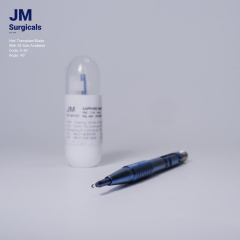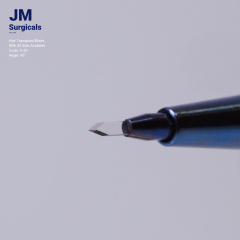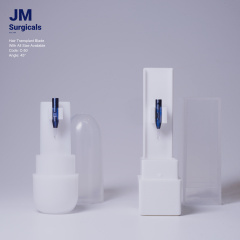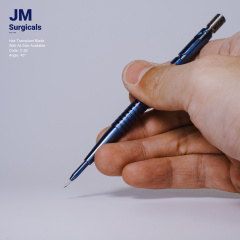
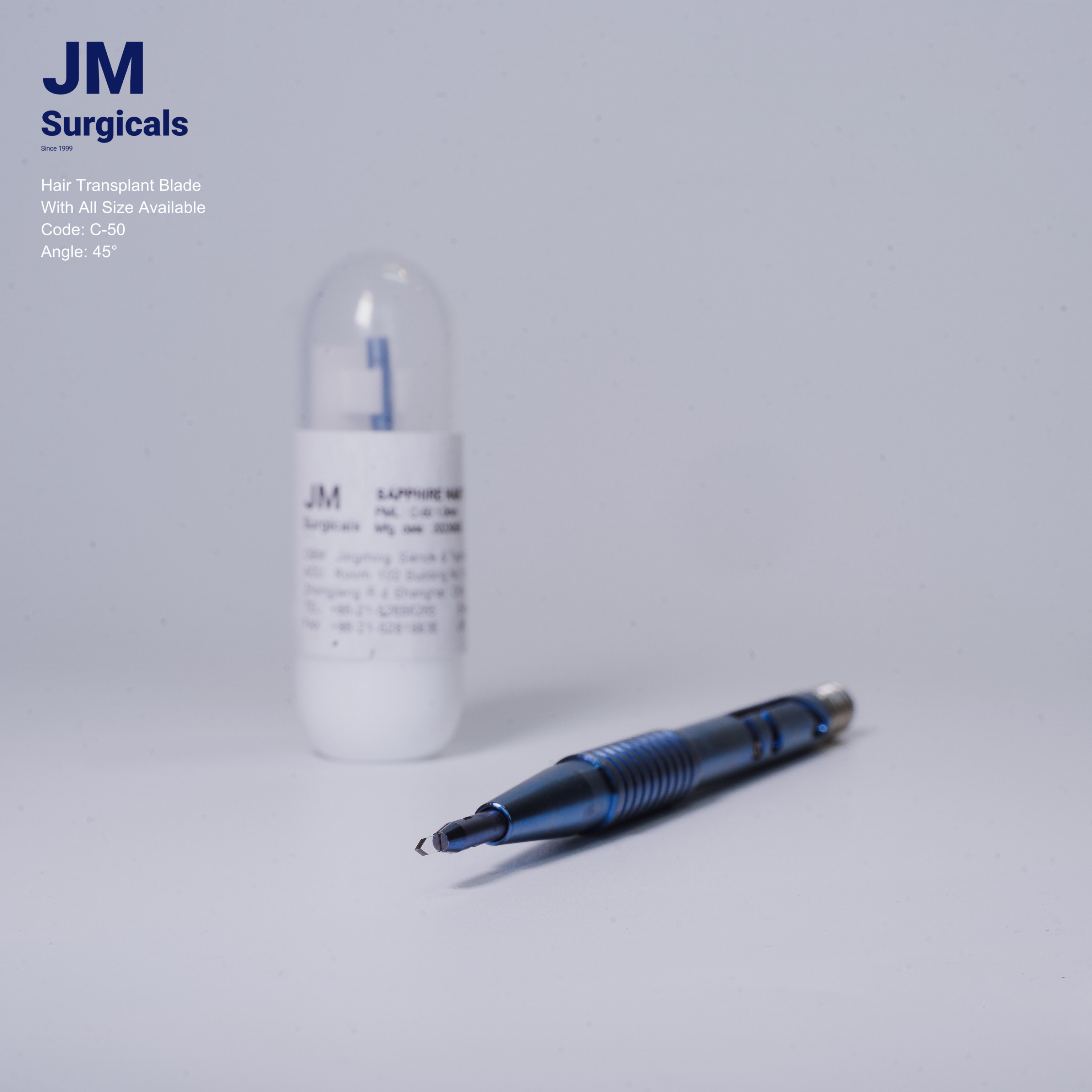
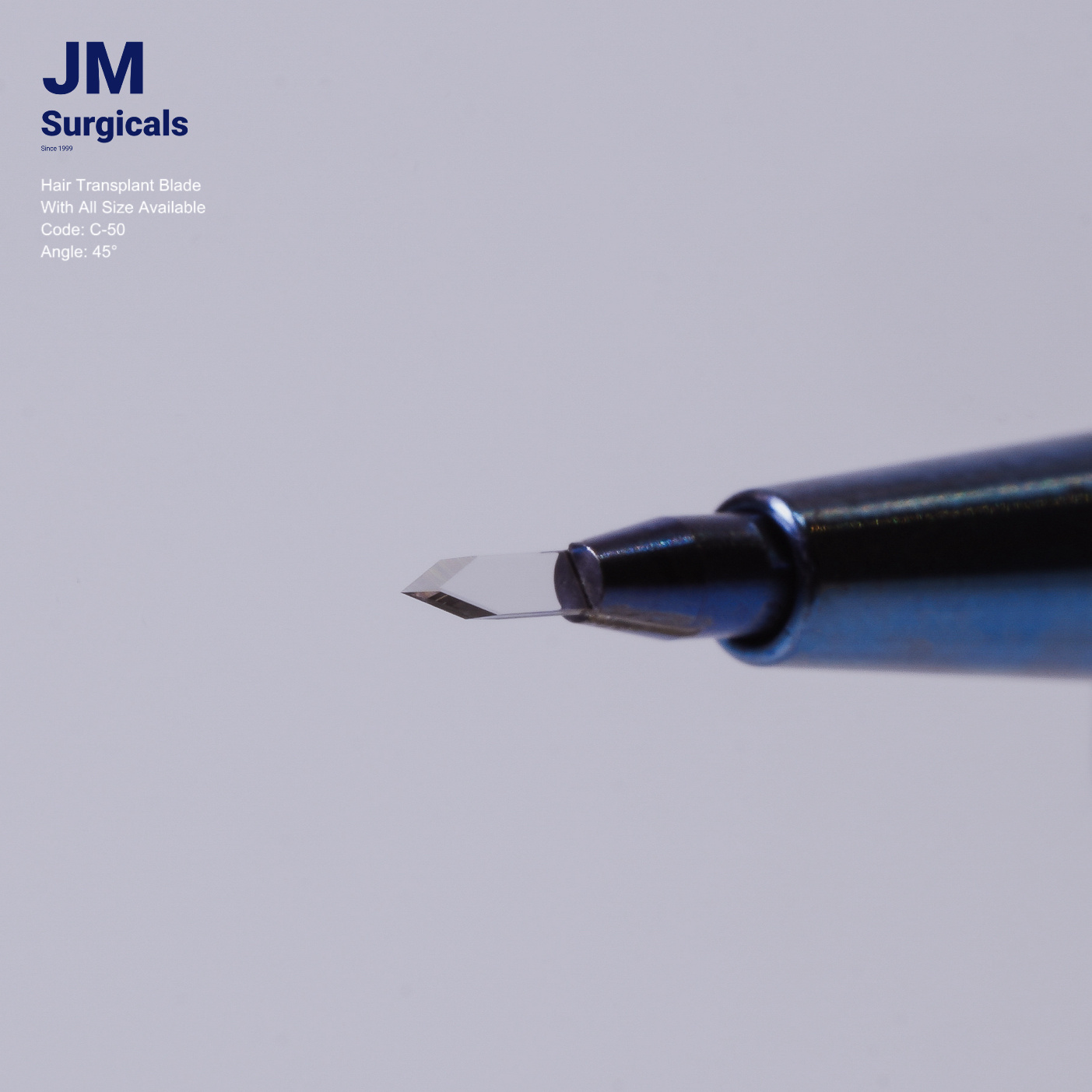
The 1.0mm Sapphire Hair Transplant Blade C-50 offers precise follicle cutting with its ultra sharp FUE blade design, made by a sapphire surgical blade factory known for durable custom sapphire surgical blade options.



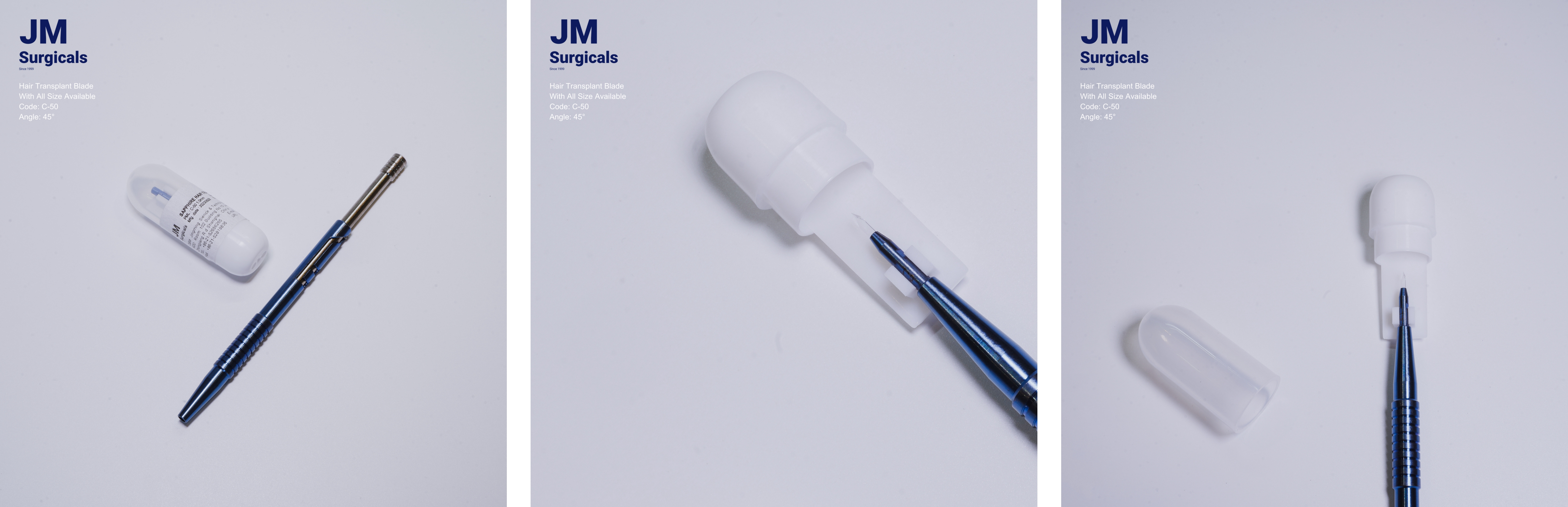
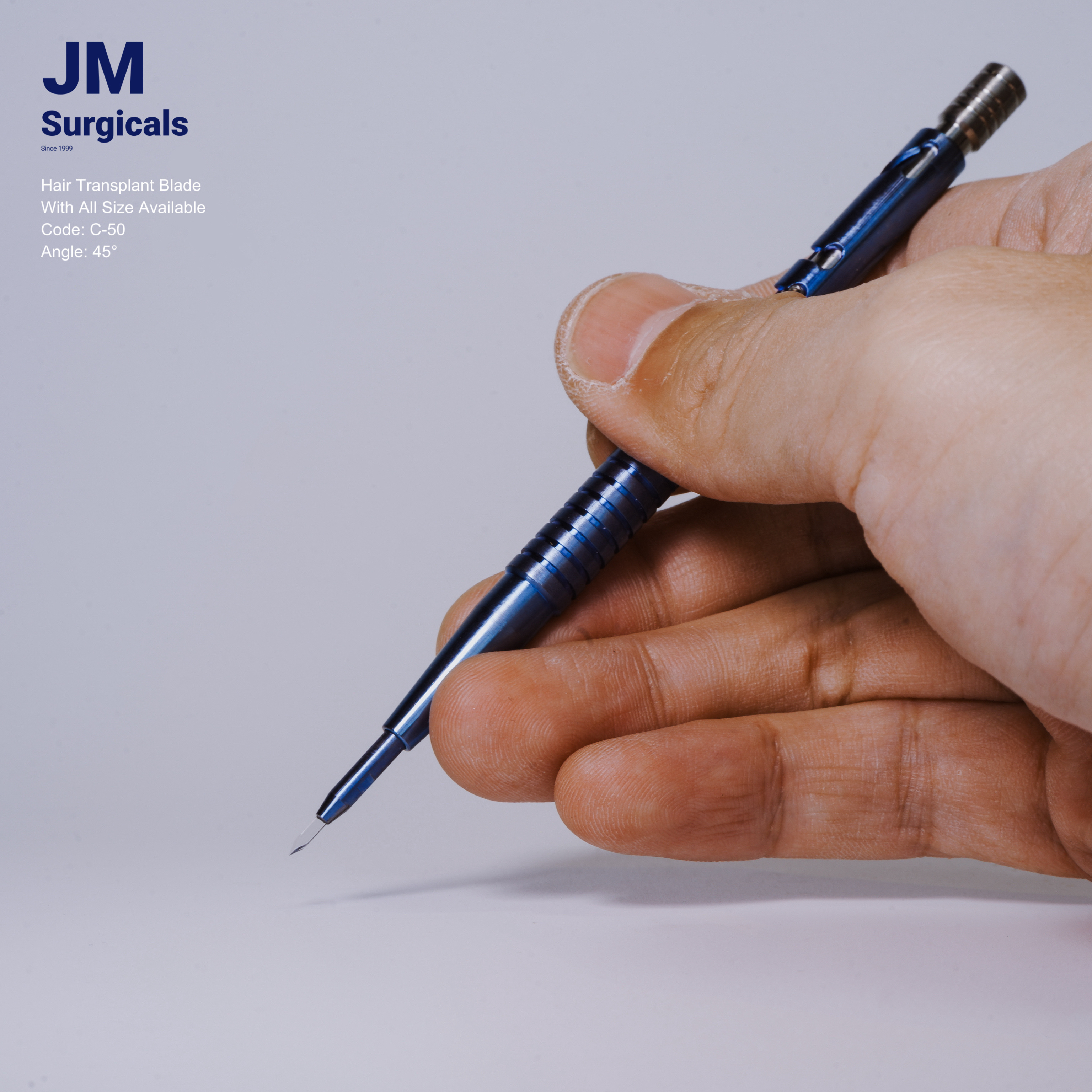
The 1.0 mm sapphire hair transplant blade sits in the middle of the range, one step above the 0.9 mm and one below the 1.1 mm, which is why it is so often the width a clinic settles on first. Its job is to open the recipient-site channels in follicular unit extraction: the blade is seated in the handle, brought to the scalp at the angle ground into its tip, and drawn through to leave a clean channel that a graft can be placed into without being forced.
The appeal of this width is balance. At 1.0 mm there is enough room for a follicular unit to slide in without being squeezed, yet the opening stays small enough to keep the procedure in micro-incision territory — exactly what a micro incision hair transplant blade is there to do in a dense case. Teams that load one width for most of a session tend to keep this one in the handle and change only at the extremes: the very finest hairline sites, or the larger units where a wider channel is easier to work with.
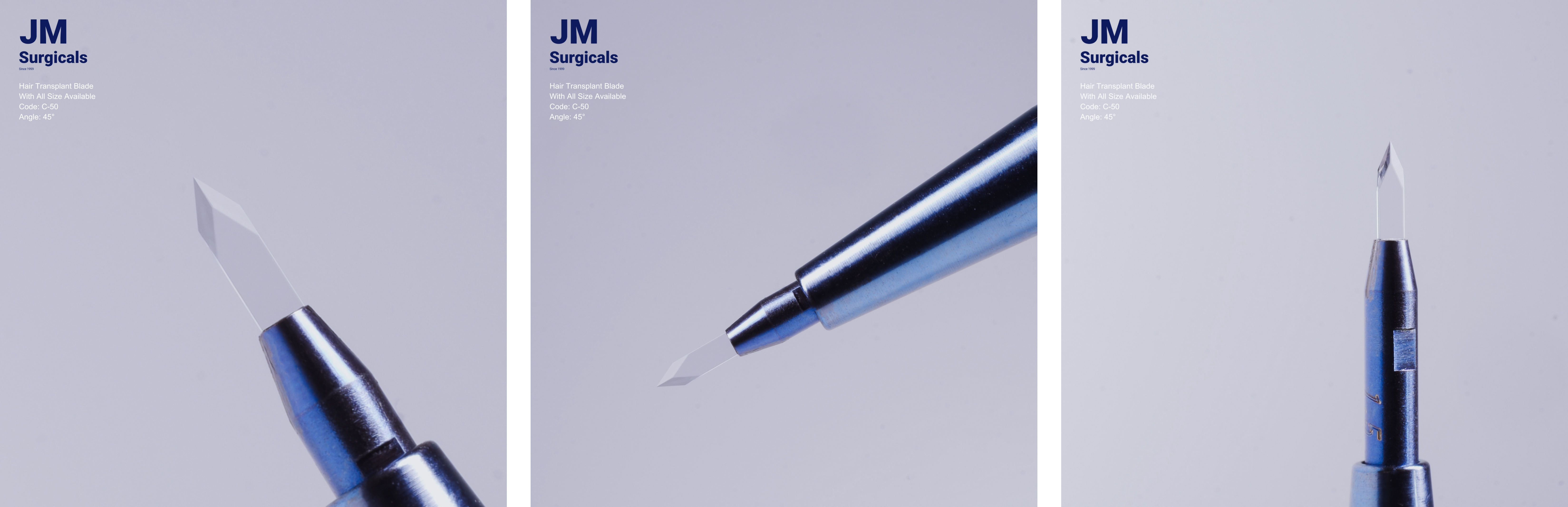
The sapphire body is kept thin behind the cutting edge, so the blade passes through the channel without dragging on the walls and the surgeon can read depth through the fingertips. The tip angle is ground in during manufacture and has to be chosen when you order, and the blade is supplied in three lengths so that the same width can be set up to feel different in the hand.
It mounts in manual and powered handles alike, so a clinic can add it to an existing instrument set without changing anything else. Hair restoration surgeons, clinic teams running FUE lists and distributors building a hair transplant line all buy the same blade; what differs is the packing and the order volume.

| Product type | Sapphire hair transplant blade for FUE recipient-site work |
| Model | C-50 |
| Width | 1.0 mm |
| Thickness | 0.25 mm |
| Length options | 4.5 mm, 5.0 mm, 5.5 mm |
| Angle options | 45° and 60° |
| Material | High-hardness sapphire |
| Cutting edge | Ultra sharp FUE blade, hand-polished |
| Blade colour | Transparent |
| Handle options | Blue or silver |
| Handle fit | Manual and powered handles |
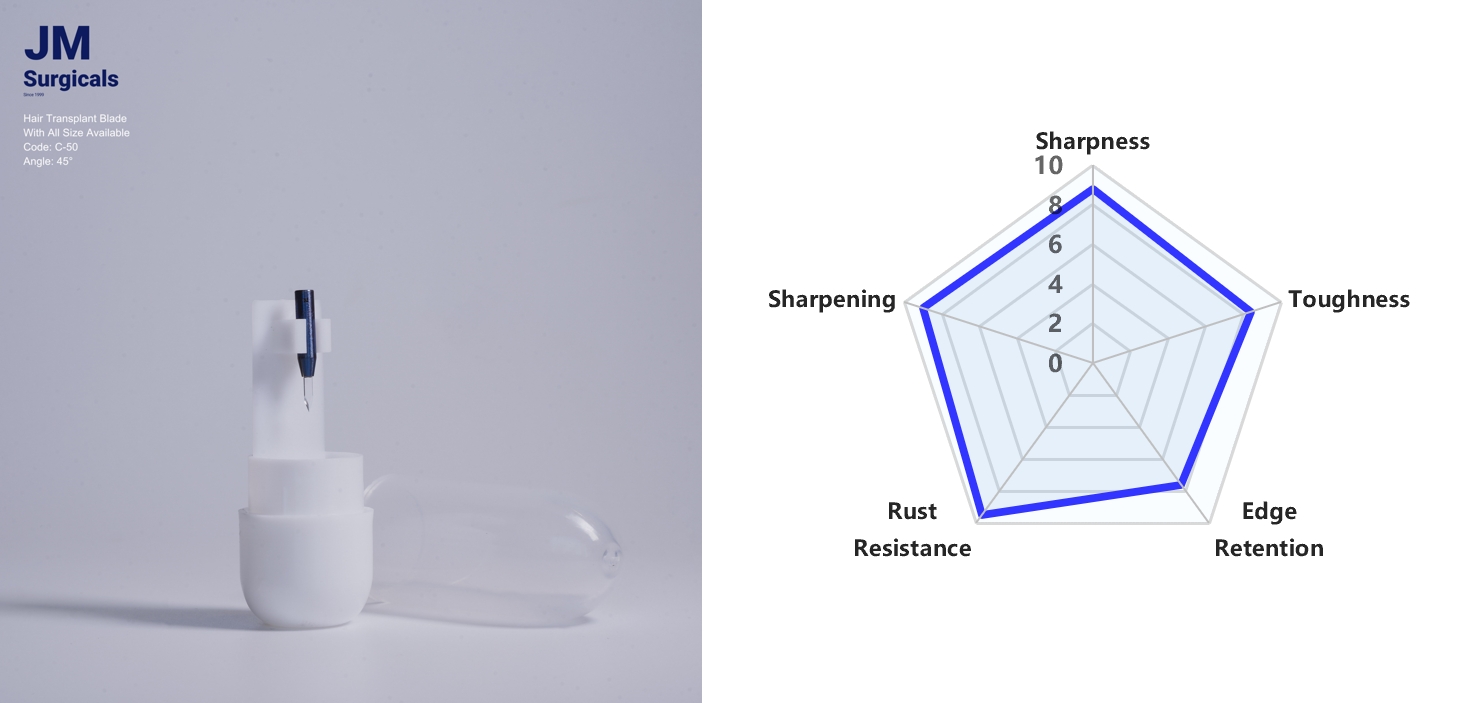
Two tip angles are made at this width, and the choice between them shapes a case more than most surgeons expect the first time they switch. Both open the same 1.0 mm channel. What changes is the line the channel takes through the scalp as the blade is advanced.
A 45° tip meets the skin at a shallower approach, so the channel lies at a lower angle to the surface. It suits a technique where the blade is drawn through in a long controlled stroke and the graft is expected to leave the scalp at a flatter angle. A 60° tip stands the channel up more steeply, which suits a more vertical insertion and a stroke where the blade is pressed in and lifted out. Neither angle is sharper or better finished than the other — the difference is geometry, and it shows in how the hair leaves the scalp rather than in how the blade cuts.
Most teams settle on one angle for the bulk of the recipient sites and keep the other within reach for the areas where they want a different exit direction. If you are moving to sapphire for the first time, order both angles at this width, run them in the same case and compare the exit angle and the ease of placement before you commit the next order to one of them.
Two practical points follow. The angle is ground into the tip, so it cannot be changed later and has to be specified when you order. And because every width in the range is offered at both angles, a surgeon who steps up or down for a particular case does not have to relearn the feel of the cut.
A micro incision hair transplant blade lives or dies on the same two things as any other fine FUE incision blade: the angle decides the direction, the edge decides the quality, and both are checked separately on every blade we grind.
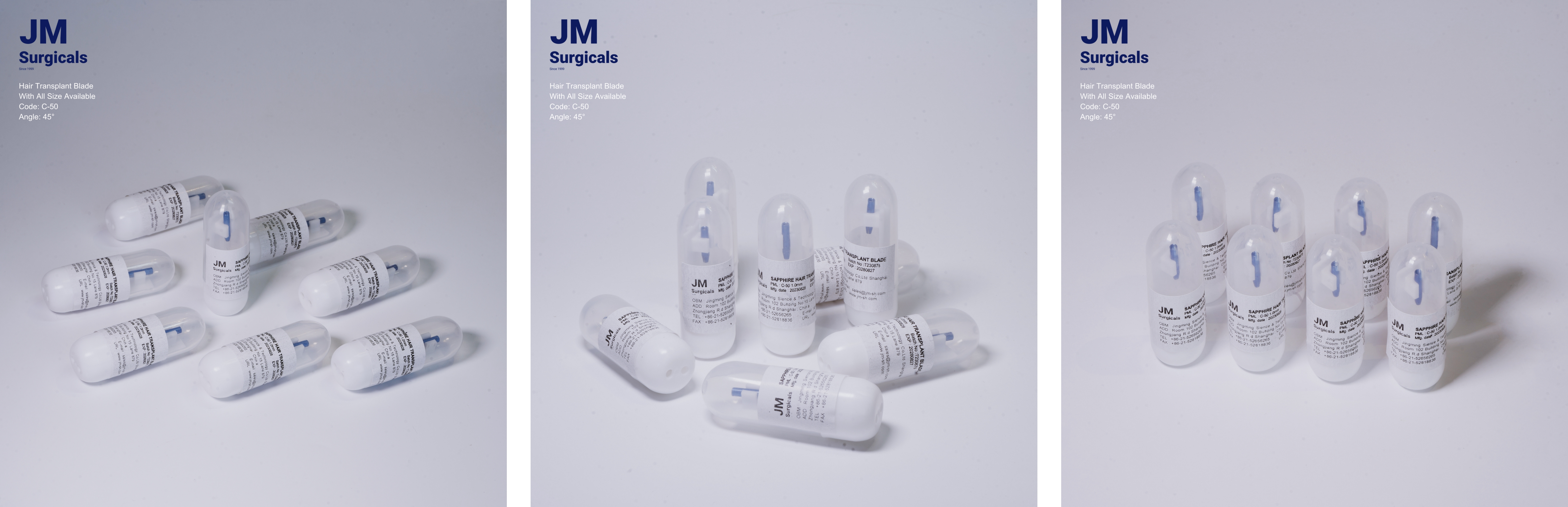
| Minimum order (overseas) | 100 pieces |
| Lead time, 1–500 pieces | about 10 days |
| Lead time, over 500 pieces | confirmed with your order |
| Packing | Neutral or custom packaging options |
| Custom logo | from 300 pieces |
| Custom graphics | from 1,000 pieces |
| Custom packaging | from 5,000 pieces |
| Warranty | 12 months |
| Shelf life | 5 years |
| After-sales support | Remote operation training |
| Quality system | ISO 13485 |
| Manufactured by | JM Surgicals, sapphire surgical blade factory |
| Business type | Micro surgical blade manufacturer |
Because we manufacture in-house, technical questions go straight to the engineers who build the instruments. JM Surgicals has been a surgical instrument manufacturer since 1999, with a team of more than 100 people, and we work alongside clinics, hospitals, private surgeons and distributors to match the right specification to each surgeon's technique and existing instruments — and to say honestly when a custom size, neutral packing or own-brand packing suits the order better. Support carries on after delivery: our team answers handling, sterilisation and reprocessing questions, helps troubleshoot anything that behaves unexpectedly, and turns custom requests around quickly. Tell us what you need to achieve and we will confirm what we can build for you.
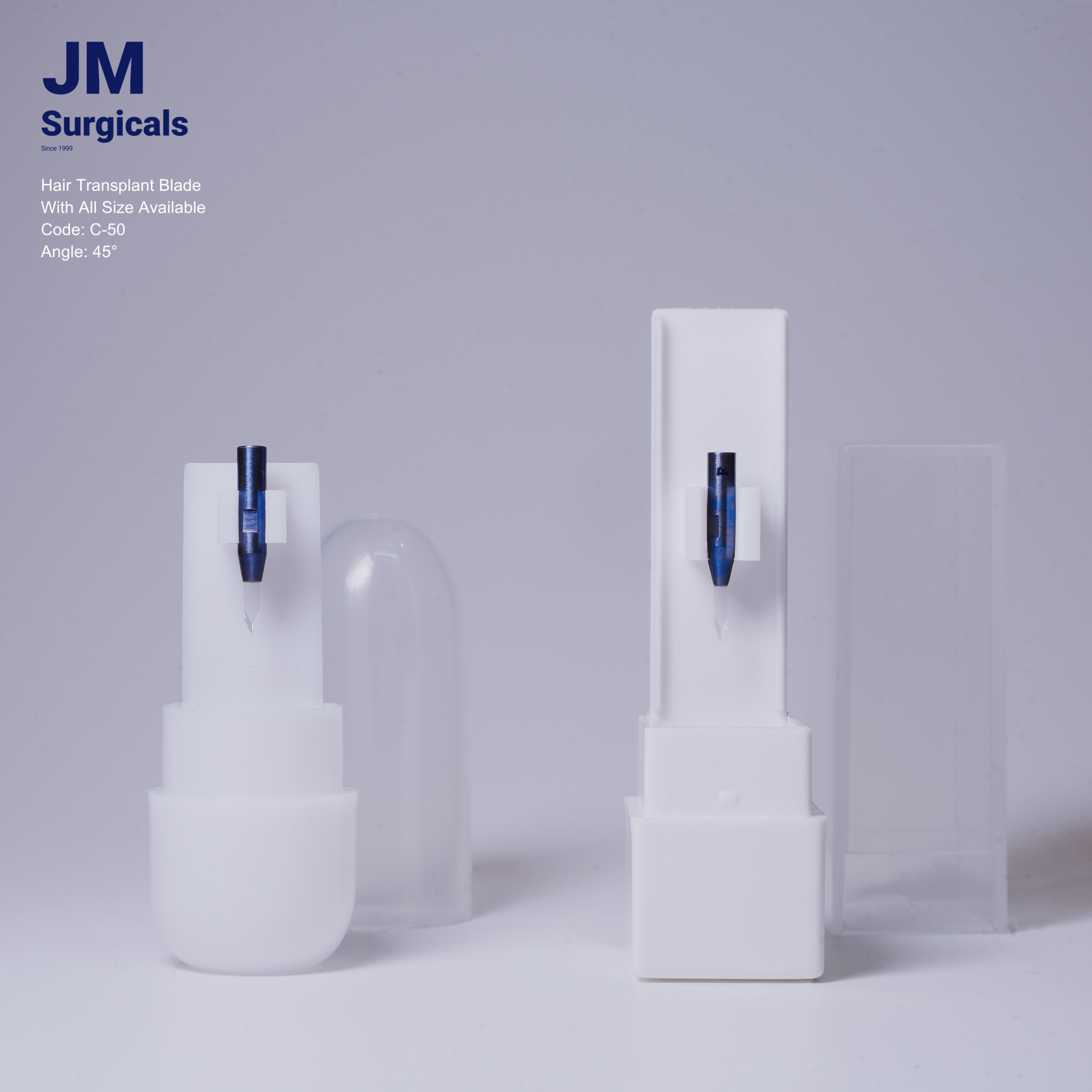
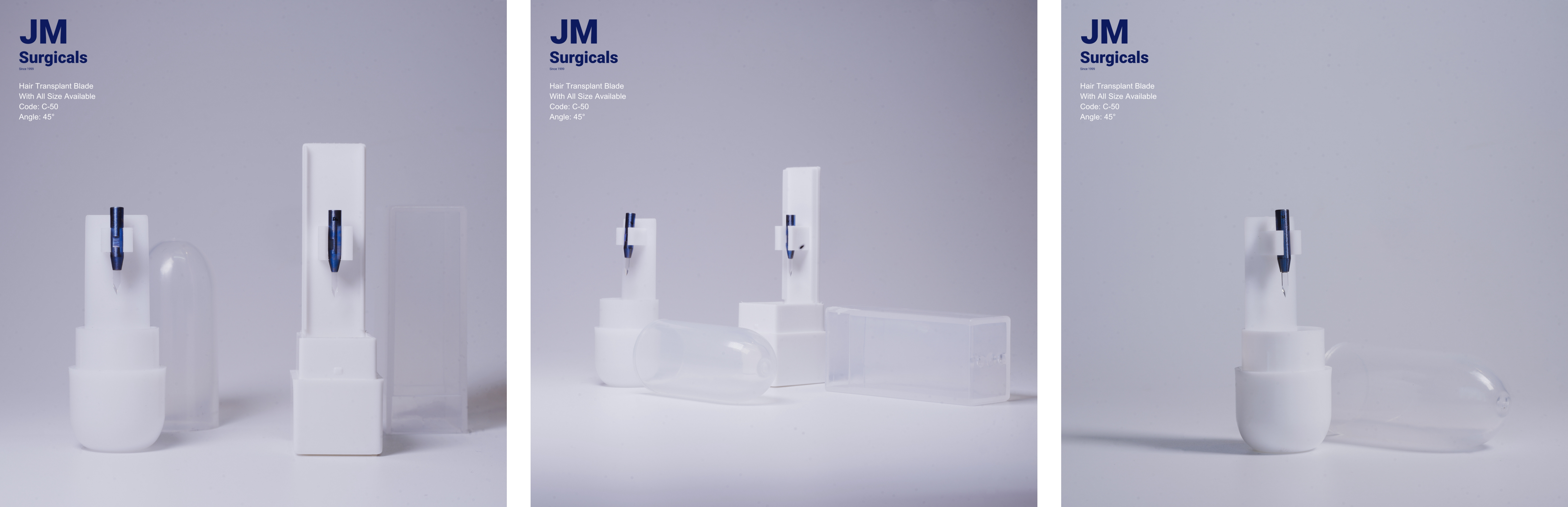
Every sapphire hair transplant blade we make uses the same high-hardness sapphire as the cutting part, not steel. That matters for two reasons: the edge starts hard and keeps its shape through follicle after follicle, and it does not rust or corrode in the heat and moisture of a sterilisation cycle. After grinding, the edge is hand-polished, which is the step that makes an ultra sharp FUE blade feel clean rather than draggy in tissue. The case, dust cover and handle are separate components — only the part that meets tissue is sapphire. If your quality file needs the material stated in a particular form, ask us and we will confirm what is available.
Yes — widths, lengths and tip angles can be ground beyond the standard options. Our sapphire surgical blade factory works to a drawing or a written specification you approve, and a custom part is finished to the same edge standard as a stock width, so it does not feel different in the handle. Most requests start from a standard width with a different length or angle. As a micro surgical blade manufacturer we can also tell you when a requested dimension is impractical before you commit to it — send the specification you have in mind and we will confirm what can be produced and what quantity that specification requires.
Sapphire is corrosion resistant and tolerates repeated sterilisation cycles, which is why many clinics reprocess these blades rather than treating them as single-use. Clean and sterilise to the protocol your clinic has validated for reusable micro instruments, keep the blade in its case or on a covered tray between uses, and protect the tip from knocks — a chipped edge cannot be resharpened. Inspect the tip under magnification before each case and retire any blade that has lost its point; a low trauma hair transplant blade stays low trauma only while the edge is intact. If you have not run sapphire through your cycle before, ask us first — as the micro surgical blade manufacturer we can tell you what the material tolerates.
The blade mounts in both manual and powered handles, and the mounting end is made to fit a range of handle types rather than one proprietary chuck. Tell us which handle your team works with and the length you want, and we will confirm the fit before your first order. Fit matters more than it sounds: a low trauma hair transplant blade only behaves predictably when it is seated firmly, and a loose FUE incision blade in a long case is worse than no blade at all.
Length is about how much blade sits proud of the handle, not about the width of the channel. The 4.5 mm option gives the most compact instrument with the least blade showing; 5.5 mm gives more reach and a longer visible edge for a deeper set or a longer stroke; 5.0 mm sits between the two. Surgeons usually settle this by feel rather than by rule, so if you are unsure, order two lengths at this width for your first delivery and compare them across a case. Length is fixed at manufacture, so decide it together with the angle — every precision hair transplant blade in the range is ground to the same edge standard at every length, which leaves geometry as the only variable you are comparing.