• JM Surgicals | 0.9mm Sapphire Hair Transplant Blade C-50 | Precision FUE Blade, Ultra-Sharp, Scalp Microblades
  • JM Surgicals | 0.9mm Sapphire Hair Transplant Blade C-50 | Precision FUE Blade, Ultra-Sharp, Scalp Microblades
  • JM Surgicals | 0.9mm Sapphire Hair Transplant Blade C-50 | Precision FUE Blade, Ultra-Sharp, Scalp Microblades
  • JM Surgicals | 0.9mm Sapphire Hair Transplant Blade C-50 | Precision FUE Blade, Ultra-Sharp, Scalp Microblades
  • JM Surgicals | 0.9mm Sapphire Hair Transplant Blade C-50 | Precision FUE Blade, Ultra-Sharp, Scalp Microblades
  • JM Surgicals | 0.9mm Sapphire Hair Transplant Blade C-50 | Precision FUE Blade, Ultra-Sharp, Scalp Microblades
  • JM Surgicals | 0.9mm Sapphire Hair Transplant Blade C-50 | Precision FUE Blade, Ultra-Sharp, Scalp Microblades
  • JM Surgicals | 0.9mm Sapphire Hair Transplant Blade C-50 | Precision FUE Blade, Ultra-Sharp, Scalp Microblades

JM Surgicals | 0.9mm Sapphire Hair Transplant Blade C-50 | Precision FUE Blade, Ultra-Sharp, Scalp Microblades

No.PTC500900001

Product Name:
0.9mm Sapphire Hair Transplant Blade
Product Type:
FUE Hair Transplant Tool  
Features:
Ultra-Sharp Sapphire Blade

The 0.9mm sapphire hair transplant blade offers superior precision and durability for follicular unit extraction. This custom size FUE blade delivers ultra-sharp incisions with minimal tissue trauma.


Model
C-50
Angle
45°, 60°
Width
0.9mm
Length
4.5mm,5.0mm,5.5mm
Thickness
0.25mm
  • JM Surgicals | 0.9mm Sapphire Hair Transplant Blade C-50 | Precision FUE Blade, Ultra-Sharp, Scalp Microblades
  • JM Surgicals | 0.9mm Sapphire Hair Transplant Blade C-50 | Precision FUE Blade, Ultra-Sharp, Scalp Microblades
  • JM Surgicals | 0.9mm Sapphire Hair Transplant Blade C-50 | Precision FUE Blade, Ultra-Sharp, Scalp Microblades
  • JM Surgicals | 0.9mm Sapphire Hair Transplant Blade C-50 | Precision FUE Blade, Ultra-Sharp, Scalp Microblades

Description

The Fine End of the C-50 Range

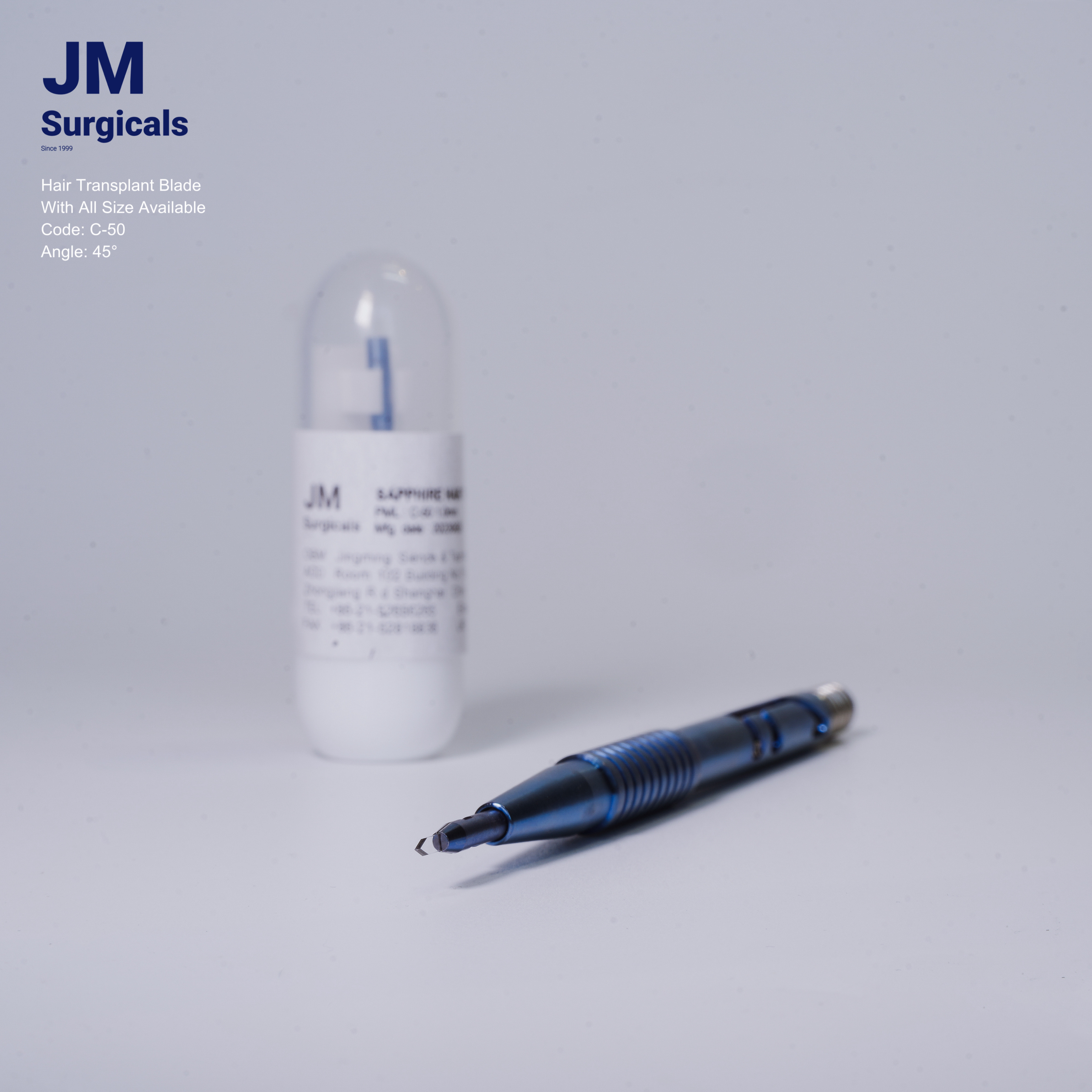
Hair transplant blade with blue handle and clear vial

This 0.9 mm sapphire hair transplant blade is built for fine recipient sites during follicular unit extraction. Where a 1.0 mm or 1.1 mm blade gives a graft more room, this one keeps the opening tight — useful along a hairline or anywhere a compact channel matters more than channel width.

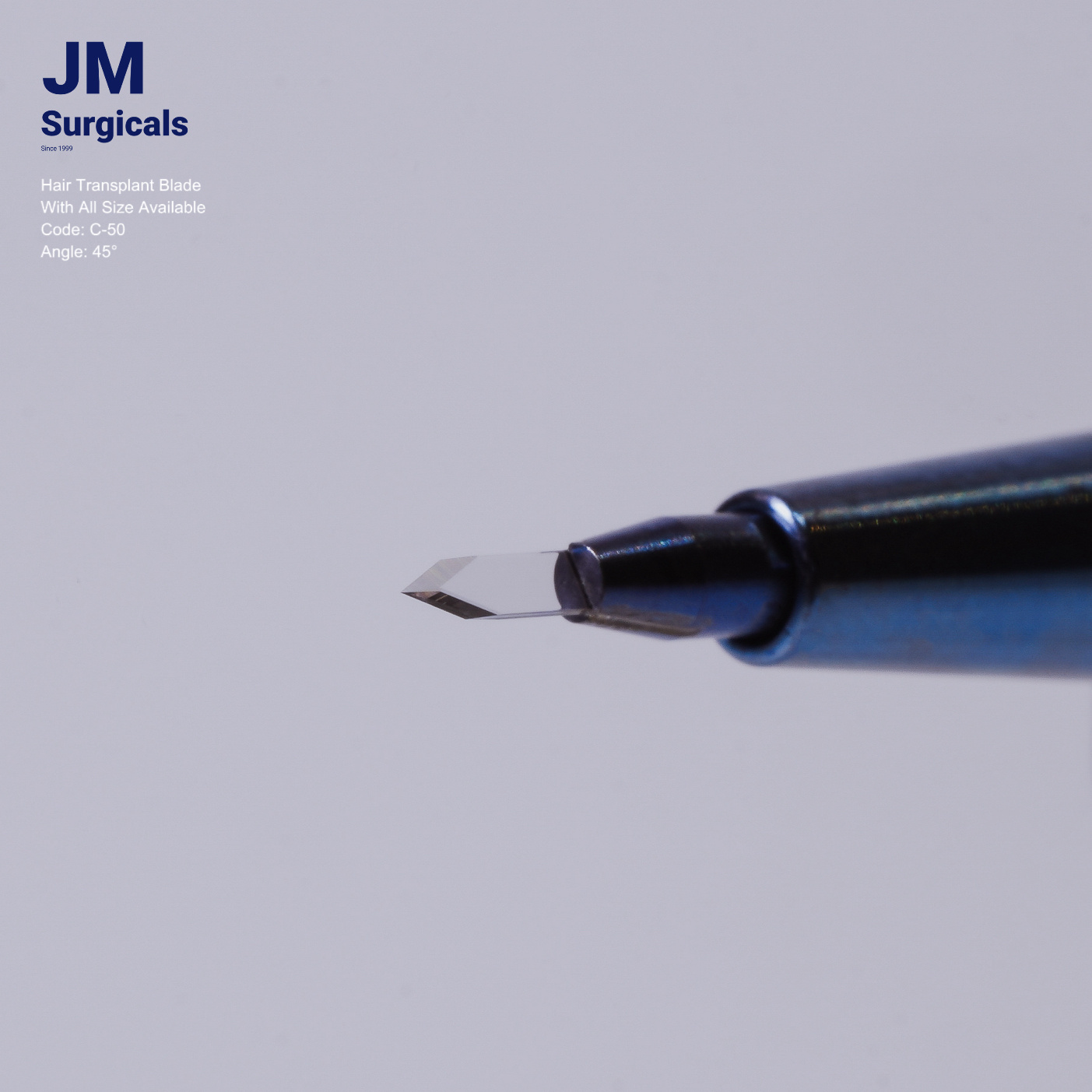
The blade is ground from high-hardness sapphire to a 0.25 mm body and hand-polished at the tip. It is supplied in three lengths with a 45° or 60° cutting angle, so a clinic can stay within the C-50 family and still set the fine end up differently for individual surgeons. The transparent edge lets you follow the tip and the depth of the channel as the incision is made.

JM Surgicals has manufactured surgical instruments since 1999 and grinds these blades in its own workshop. That in-house control is why a repeat order of this precision FUE blade comes back at the same width, thickness and edge geometry as the batch before it.

C-50 0.9 mm Blade Specifications

Unread image carried over from the original listing
Specification Detail
Model C-50
Product code PTC500900001
Blade width 0.9 mm
Blade thickness 0.25 mm
Lengths 4.5 mm, 5.0 mm, 5.5 mm
Cutting angles 45° and 60°
Material High-hardness sapphire, transparent
Edge finish Hand-polished
Handle Blue or silver
Device classification Class I
Quality system ISO 13485
Case Heat-resistant plastic with dust cover

What the Sapphire Edge Does in Fine Tissue

  • A polished point. Each ultra sharp FUE blade is hand-finished after grinding; that final polish is what removes the drag a surgeon feels on entry in a tight channel.
  • Hard enough to stay sharp. High-hardness sapphire holds its geometry through a long case list, so the last site of the morning cuts like the first.
  • Clear at the tip. Transparent sapphire shows the depth of the channel while the blade is in the scalp, which matters most where the opening is only 0.9 mm wide.
  • Slim behind the cutting edge. The body passes through the channel without rubbing the walls, keeping trauma low in fine recipient work.
  • Two handle finishes. Blue or silver, so the blade can match the rest of a clinic's set and stay easy to identify on a tray.
  • Made in-house. Grinding and polishing stay under one roof at our sapphire surgical blade factory, which is how width and edge are held from batch to batch.
Blade product photo beside radar chart of sharpness ratingsClose-up of angled blade tip and metal handle

Three Dimensions That Define the Channel

  1. Width sets the opening. At 0.9 mm this precision FUE blade sits near the fine end of the C-50 family, so the channel stays as small as the graft will allow. Larger units or denser site placement usually call for 1.0 mm or 1.1 mm rather than a wider incision at this width.
  2. Length sets reach. The 4.5 mm blade sits most compactly in the handle; 5.5 mm gives more visible edge for a deeper set or a longer stroke; 5.0 mm sits between. Every length is ground to the same edge geometry.
  3. Angle sets direction. The 45° tip lies closer to the scalp for a flatter channel; the 60° tip stands the channel up for a steeper entry. Both are fixed at manufacture, so the angle is chosen when the blade is ordered.

Case, Cover and Autoclave Routine

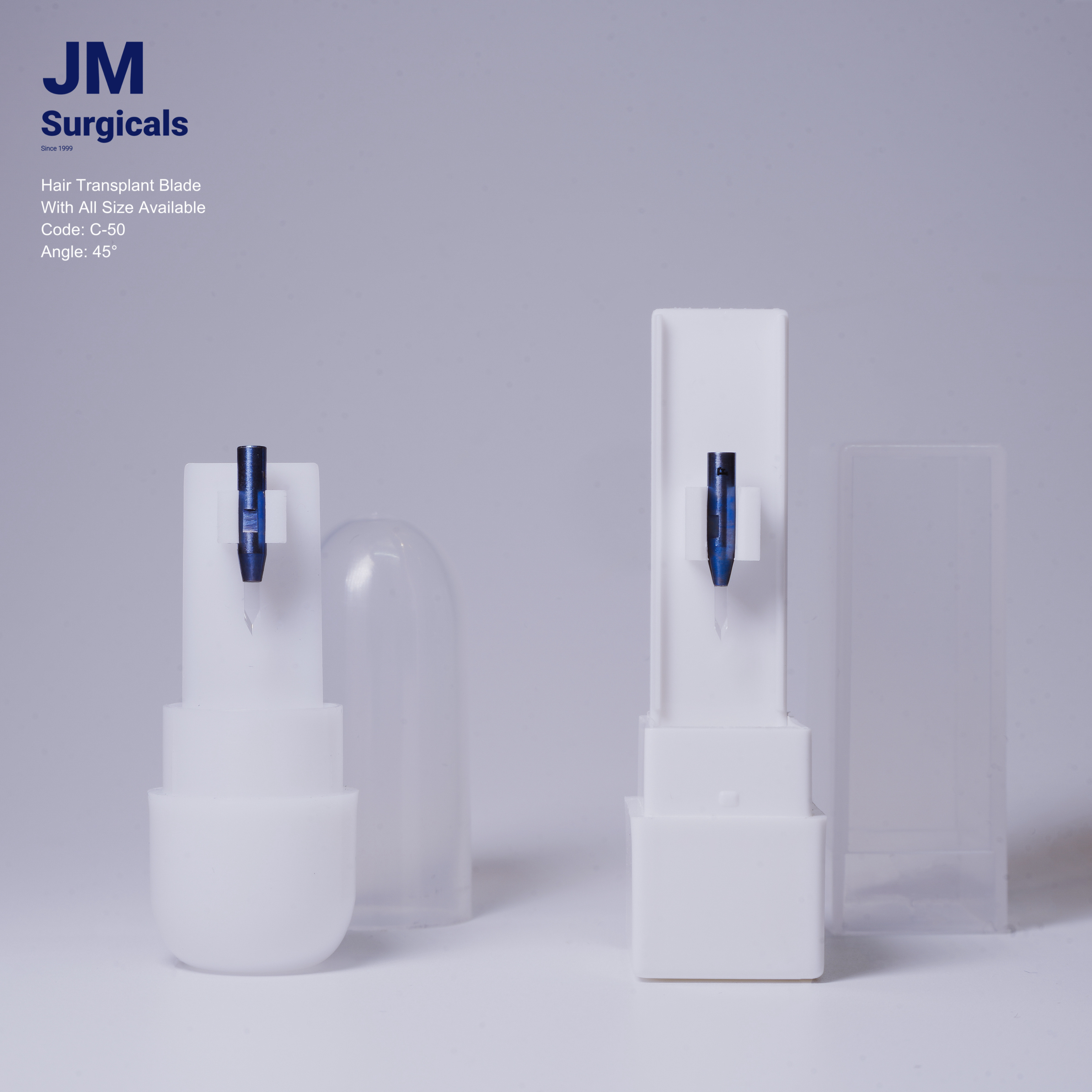
Each blade sits in a heat-resistant plastic case with a dust cover over the tip. Three case styles are used across the range, and all three are shaped so the polished edge stays clear of the case wall in transit. The case tolerates autoclave temperatures without deforming, which lets a clinic reprocess the blade on its normal instrument cycle.

What to check on arrival. Inspect the case and cover before the blade goes near the sterile field. A cracked case or a cover that has come loose is reason to set that ultra sharp FUE blade aside; an edge that has taken a knock will not cut cleanly, and sterilising will not restore it.

Storage. Keep the blade in its case until the moment of use. Shelf life is five years in cool, dry conditions away from direct sunlight.

Blade in white holder with clear protective coverSeveral clear vials of sapphire blades with white caps

Where a 0.9 mm Channel Earns Its Place

  • Hairline detail. The fine sites at the front of a case benefit from a compact channel and a clean exit angle, where a wider opening would show.
  • Single-surgeon clinics. One width, one length and one angle become the house standard, with a second angle kept for cases that need a different approach.
  • Hospital day-surgery lists. The blade fits the normal reprocessing routine of a dermatology or plastic surgery department adding FUE to its programme.
  • Mixed case lists. When a day combines fine recipient sites with denser placement, this width covers the fine end while a 1.0 mm or 1.1 mm blade from the same family handles the rest.
  • Regenerative tissue sampling. The same fine sapphire edge is used where a small sample has to come out cleanly, with minimal disruption to the cells around it.
  • Distributors and private-label buyers. The 0.9 mm width gives a distributor a fine-width option in the C-50 range, sourced from one sapphire surgical blade factory.

Placing an Order for This Width

  1. Confirm the specification: 0.9 mm width, then length, angle and handle finish.
  2. Set the quantity. Overseas orders start at 100+ pieces. Orders of 1–500 pieces typically take about 10 days; above 500 pieces the schedule is agreed before production starts.
  3. Choose the packing. Neutral and custom packaging options are both available, and every blade still travels in its heat-resistant case with a dust cover.
  4. Agree any branding. Customised logo from 300 pieces, graphic customisation from 1,000 pieces, and customised packaging from 5,000 pieces.
  5. Note the after-sales cover. Warranty service runs for 12 months, and remote operation training is available for your team.
  6. Reorder by part number. Quote PTC500900001 so the width, length and angle come back unchanged.

Engineering Support From the Blade Makers

Because the blades are made in-house, technical questions reach the engineers who grind them. JM Surgicals has been a surgical instrument manufacturer since 1999, with a team of more than 100 people, and works with clinics, hospitals, private surgeons and distributors on specification questions, including custom sapphire surgical blade requests outside the standard ladder. Support continues after delivery: the team answers handling, sterilisation and reprocessing questions, helps trace anything that behaves unexpectedly, and confirms what can be built before an order is placed. Tell us the channel you need to create and we will confirm the specification we can hold.

Technical Support & Model Matching

Because we manufacture in-house, technical questions go straight to the engineers who build the instruments. JM Surgicals has been a surgical instrument manufacturer since 1999, with a team of more than 100 people, and we work alongside clinics, hospitals, private surgeons and distributors to match the right specification to each surgeon's technique and existing instruments — and to say honestly when a custom size, neutral packing or own-brand packing suits the order better. Support carries on after delivery: our team answers handling, sterilisation and reprocessing questions, helps troubleshoot anything that behaves unexpectedly, and turns custom requests around quickly. Tell us what you need to achieve and we will confirm what we can build for you.

FAQ

Q1. Where does the 0.9 mm blade sit against the wider C-50 widths?

It is one of the finer standard widths in the C-50 family, so it opens a small channel. A 1.0 mm or 1.1 mm blade gives a graft more room and is usually chosen for larger units or denser site placement; the 0.9 mm sapphire hair transplant blade is kept for hairline sites and anywhere the opening should stay as small as the graft allows. Thickness and edge geometry are the same across the ladder, so only the channel width changes.

Q2. Which tip angle suits fine hairline sites?

A 45° tip is the usual choice for hairline work: it lies closer to the scalp and produces a flatter channel, so the hair exits at a lower angle. A 60° tip stands the channel up for a steeper entry. Both angles are ground into the tip at manufacture and both are available at 0.9 mm; the choice follows the exit direction you want, not the sharpness of the blade.

Q3. Is this blade intended for scalp micropigmentation or at-home use?

No. It is a surgical instrument for follicular unit extraction, not a cosmetic microblading or scalp micropigmentation tool, and it is not intended for at-home use. The ultra sharp FUE blade is supplied for clinical settings where a trained surgeon creates the recipient site under sterile conditions.

Q4. What does the 0.25 mm blade thickness contribute?

The 0.25 mm body keeps the blade slim behind the cutting edge while leaving enough stiffness for a controlled entry. In a 0.9 mm channel that balance matters: too thick and the blade drags on the channel walls; too thin and the tip can wander in firmer tissue. Thickness is held constant across the C-50 range, so stepping up or down in width does not change the feel of the body.

Q5. Can a 0.9 mm blade be made with a non-standard length or angle?

Yes. Length and angle are chosen at order, and widths outside the standard ladder can be ground to a drawing or written specification. A custom sapphire surgical blade is finished to the same edge standard as a stock 0.9 mm blade, so it does not feel different in the handle. Send the width, length and angle together and we will confirm what can be produced.

Download

We use Cookie to improve your online experience. By continuing browsing this website, we assume you agree our use of Cookie.